
Is Miami Florida a good place to live?
Yes, Miami is widely considered a good place to live for people who value warm weather, ocean access, and a vibrant international lifestyle. The city offers year-round sunshine, cultural diversity, and strong opportunities in industries such as real estate, tourism, finance, and technology. However, it also comes with higher living costs, heavy traffic, and seasonal hurricane risks, all of which should be carefully considered before relocating.

5.05.2026

10 minutes

June 4, 2026

What’s It Like to Live in Miami?
Miami has an energy that feels distinctly global. It’s a city where Latin rhythms blend with American ambition, where Art Deco architecture stands beside modern glass towers, and where business deals are just as likely to happen in Spanish as in English. Living here means accepting certain trade-offs: world-class beaches and cultural diversity come alongside traffic congestion and a cost of living roughly 21% higher than the national average. For many residents, the equation is worth it. The metropolitan area, home to more than 6.4 million people, has become a magnet for young professionals, international buyers, entrepreneurs, and retirees looking for warmth without leaving the United States. At the same time, Miami is not for everyone — and understanding the city requires looking beyond postcard images of South Beach.
Facts to Know About Miami
Miami, Florida — Is It a Good Place for Living?
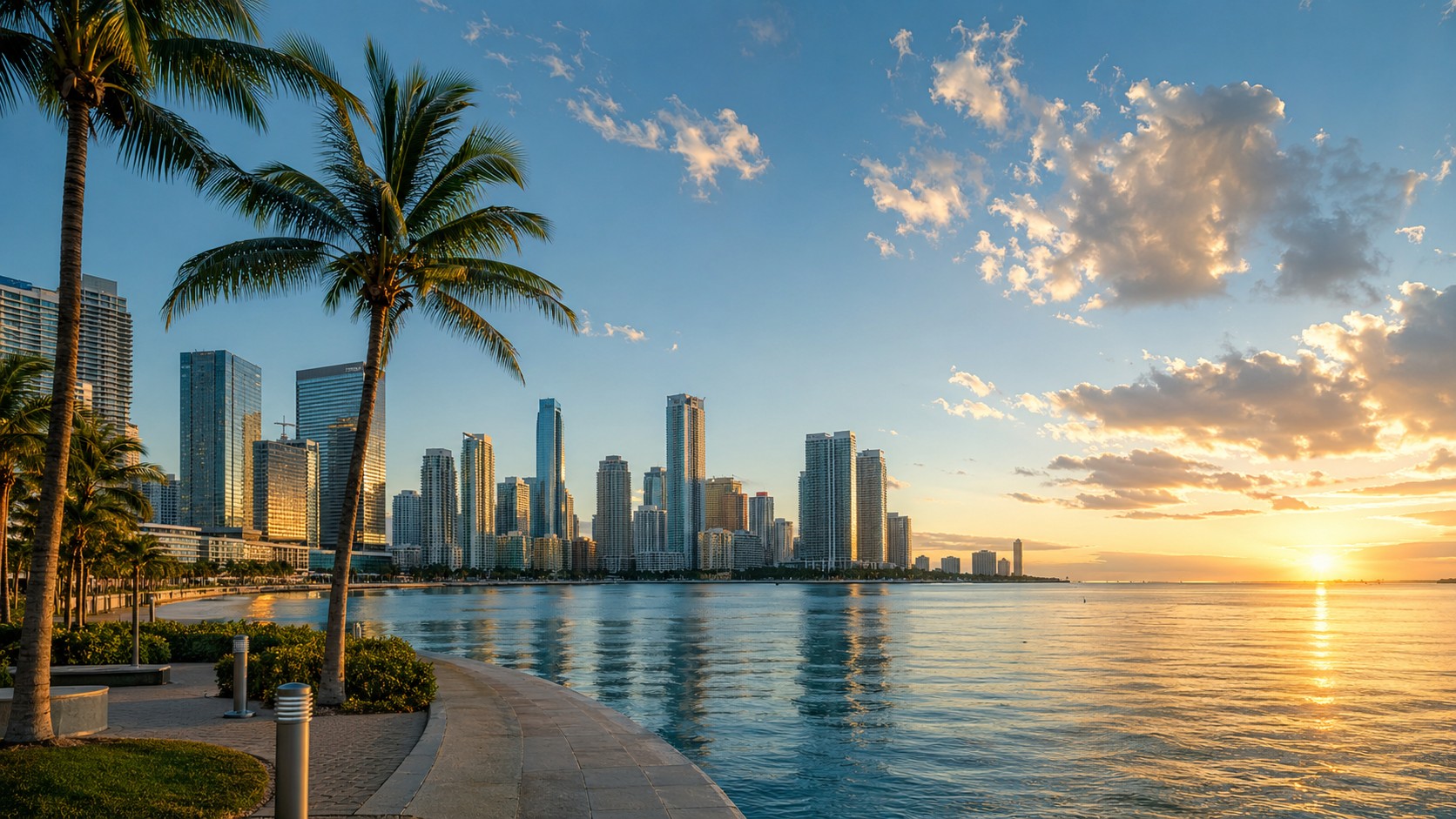
Yes, Miami is a good place to live for people who prioritize climate, lifestyle, and cultural diversity. The city offers a unique combination of oceanfront living, international business opportunities, and year-round outdoor activity. However, it is best suited for people with stable incomes who can comfortably manage higher housing costs and daily expenses. One important advantage is that Florida has no state income tax, which can partially offset Miami’s higher cost of living. Another major benefit is the climate — residents enjoy around 250 sunny days per year, making outdoor living a central part of everyday life.
At the same time, Miami is one of the most climate-exposed major cities in the United States, with hurricane season lasting from June through November.
Population
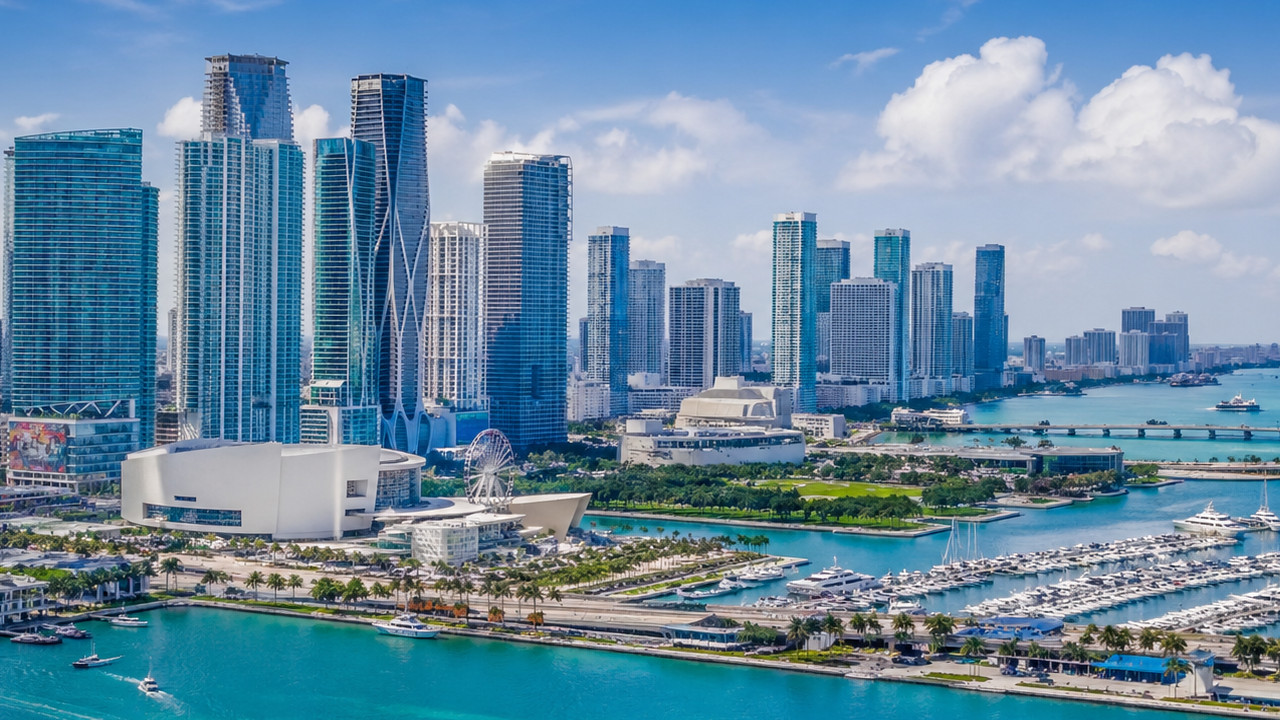
Miami residential neighborhoods with palm trees and suburban lifestyle in Florida
Miami proper has approximately 487,000 residents as of 2024, with projections approaching 509,000 by 2026. The broader metropolitan area includes more than 6.4 million people, making it one of the largest urban regions in the Southeastern United States. Miami is also one of the most diverse cities in America. More than 70% of residents identify as Hispanic or Latino, with strong Cuban, Venezuelan, Colombian, Haitian, and Nicaraguan communities shaping the city’s identity.
This diversity is not just demographic data — it directly shapes Miami’s culture, influencing everything from restaurants and music to business culture and the languages heard in everyday conversation.
Special landmarks
Miami’s identity is closely tied to several iconic districts and landmarks.
The Art Deco Historic District in South Beach contains more than 800 preserved pastel-colored buildings from the 1930s and 1940s, forming one of the world’s largest concentrations of Art Deco architecture.
Wynwood Walls transformed a former warehouse district into one of the world’s most recognized outdoor street art destinations.
Little Havana and Calle Ocho remain the cultural center of Cuban-American life in the United States, filled with cigar shops, domino parks, live music, and traditional Cuban cafés.
Beyond the city itself, Miami also benefits from proximity to Everglades National Park and Biscayne National Park, giving residents direct access to unique ecosystems rarely found near a major metropolitan area.
Historical context / implications
Miami’s modern identity began with Julia Tuttle, often called the “Mother of Miami,” who convinced railroad magnate Henry Flagler to extend his railway south in 1896.
The city’s incorporation that same year triggered rapid growth, although events such as the devastating 1926 hurricane and the Great Depression temporarily slowed development.
A major turning point came after the 1959 Cuban Revolution, when hundreds of thousands of Cuban exiles arrived in South Florida. This transformed Miami from primarily a retirement destination into a major international business center linking the United States with Latin America.
That role continues to shape Miami’s economy, culture, and real estate market today.
Universities

Miami is home to several major educational institutions, including the University of Miami, Florida International University, and Miami Dade College.
The University of Miami is a respected private research university known for strong programs in medicine, marine science, law, and business.
Florida International University is one of the largest public universities in the country and is especially recognized for serving first-generation and multicultural student communities.
Miami Dade College is one of the largest colleges in the United States and plays a major role in creating affordable education and transfer pathways into four-year universities.
Together, these institutions contribute significantly to Miami’s economy, healthcare sector, research activity, and international academic reputation.
The Pros and Cons of Living in Miami, FL
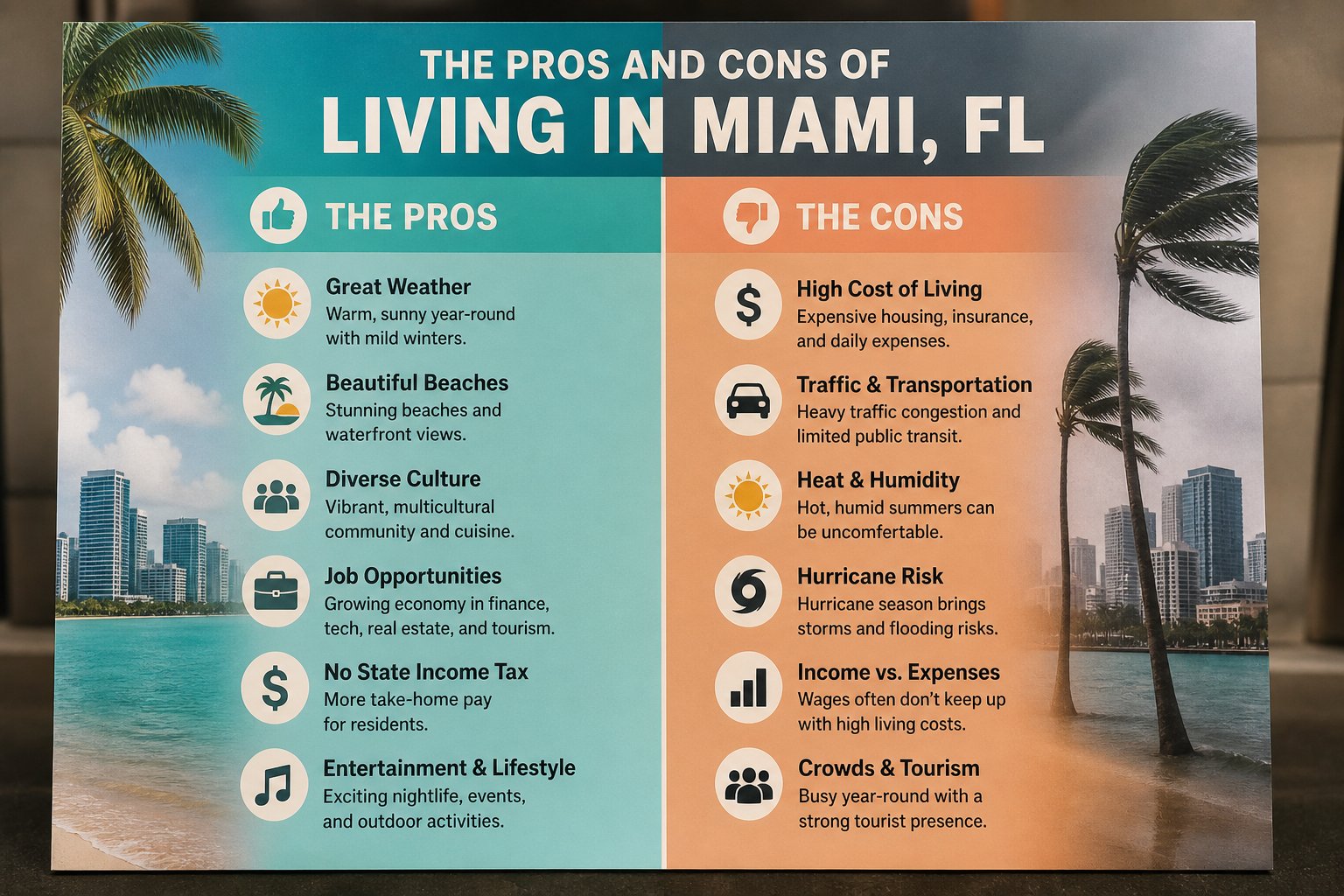
Pro: Cultural diversity
Miami’s multiculturalism is not superficial — it is foundational to the city itself.
The city functions as a bilingual metropolis where Spanish fluency can often be just as useful as English.
This diversity appears in everyday life through:
- international festivals such as Art Basel Miami Beach and the Calle Ocho Music Festival;
- cuisine ranging from Cuban cafecito and Peruvian ceviche to Haitian griot and Venezuelan arepas;
- business communities naturally connected to Latin America and international markets.
For professionals working in international trade, finance, real estate, tourism, or technology, this global connectivity can create real career advantages.
Con: Traffic congestion
The Commute Reality
Miami ranks among the most traffic-congested cities in the United States. The average commuter spends more than 50 hours per year sitting in traffic, while roads such as I-95 and the Palmetto Expressway regularly experience severe congestion during rush hour.
Traffic is probably Miami’s most universally acknowledged downside.
The city’s infrastructure has struggled to keep pace with rapid population growth, while public transportation remains relatively limited compared to cities such as New York City or Chicago.
For most residents, owning a car is almost essential.
Commutes that should take 20 minutes can easily turn into 45-minute drives or longer during peak hours.
Miami is investing in transportation improvements, including Brightline rail expansion and Metrorail development, but meaningful long-term relief will take time.
Pro: Exciting nightlife
From South Beach nightclubs and Wynwood breweries to Little Havana music venues and rooftop cocktail lounges, Miami’s nightlife scene is exceptionally diverse.
Because of the warm climate, outdoor entertainment remains active year-round.
Whether someone prefers electronic music, salsa dancing, luxury lounges, rooftop dining, or laid-back waterfront bars, Miami offers nightlife options that rival many major global cities.
Con: It gets crowded
Tourism, major events, and population density create a constant sense of activity.
Neighborhoods such as South Beach, Brickell, and Wynwood can feel overwhelming on weekends:
- beaches become heavily crowded,
- restaurant reservations may need to be booked weeks ahead,
- parking can become extremely difficult and expensive.
For people who value quieter surroundings and more personal space, Miami often requires more intentional planning — choosing calmer residential neighborhoods, less crowded beaches, or visiting popular areas during off-peak hours.
Pro: Great neighborhoods
Miami neighborhoods each have their own distinct identity, pace, and lifestyle.
Edgewater
This waterfront neighborhood combines urban convenience with bayfront views.
Modern residential towers dominate the skyline, while Margaret Pace Park provides green space, sports courts, and waterfront walking paths.
Edgewater appeals to professionals and families who want quick access to downtown, Wynwood, and the Design District without living directly inside the busiest areas.
Typical one-bedroom apartment rents range from approximately $2,700–$3,200 per month.
Miami Design District
Luxury shopping, contemporary art galleries, innovative architecture, and upscale dining define this district.
The neighborhood evolved from a previously overlooked area into one of the city’s leading destinations for fashion, design, and luxury retail.
It is especially attractive for residents who value aesthetics, modern architecture, and high-end urban living — and who are comfortable with premium pricing.
Wynwood
Once an industrial warehouse district, Wynwood has become Miami’s creative center.
The neighborhood is known for:
- Wynwood Walls,
- large-scale murals,
- art galleries,
- breweries,
- creative studios,
- trend-focused restaurants and cafés.
It attracts artists, creatives, entrepreneurs, and residents who prioritize culture and energy over peace and quiet.
Noise levels can be high, especially on weekends and during major events.
Con: High cost of living
| Expense Category | Miami vs. National Average |
| Overall Cost of Living | 21% higher |
| Housing | 60% higher than U.S. median |
| Rent (1-bedroom) | $2,700-$2,800 average |
| Median Home Price | $574,000-$699,000 |
| Utilities | 3% higher |
| Groceries | 6% higher |
Housing is the primary reason behind Miami’s elevated cost of living.
Median home prices range from approximately $574,000 to $699,000 depending on methodology, property type, and neighborhood.
Rental prices have also risen dramatically in recent years, particularly in centrally located and waterfront districts.
A single person generally needs around $2,904 per month for basic living expenses, while a family of four may require around $6,396 monthly, excluding luxury spending.
To live comfortably using the common 50/30/20 budgeting framework:
- a single adult often needs approximately $100,000–$110,000 annually;
- a family may require $230,000+ annually.
The lack of state income tax helps offset some of these costs, especially for higher earners.
However, property taxes, homeowners insurance, flood insurance, HOA fees, and maintenance costs remain major ongoing financial obligations.
💬 The Bottom Line
Miami offers a rare combination of cultural vibrancy, year-round sunshine, ocean access, and international opportunity — but it comes at a financial premium and requires patience with urban challenges. For people who can comfortably afford it and genuinely enjoy the city’s pace, Miami can provide a lifestyle unmatched by most places in the continental United States. For others, the costs, traffic, humidity, and intensity may outweigh the benefits.
Pro: Beautiful beaches and parks
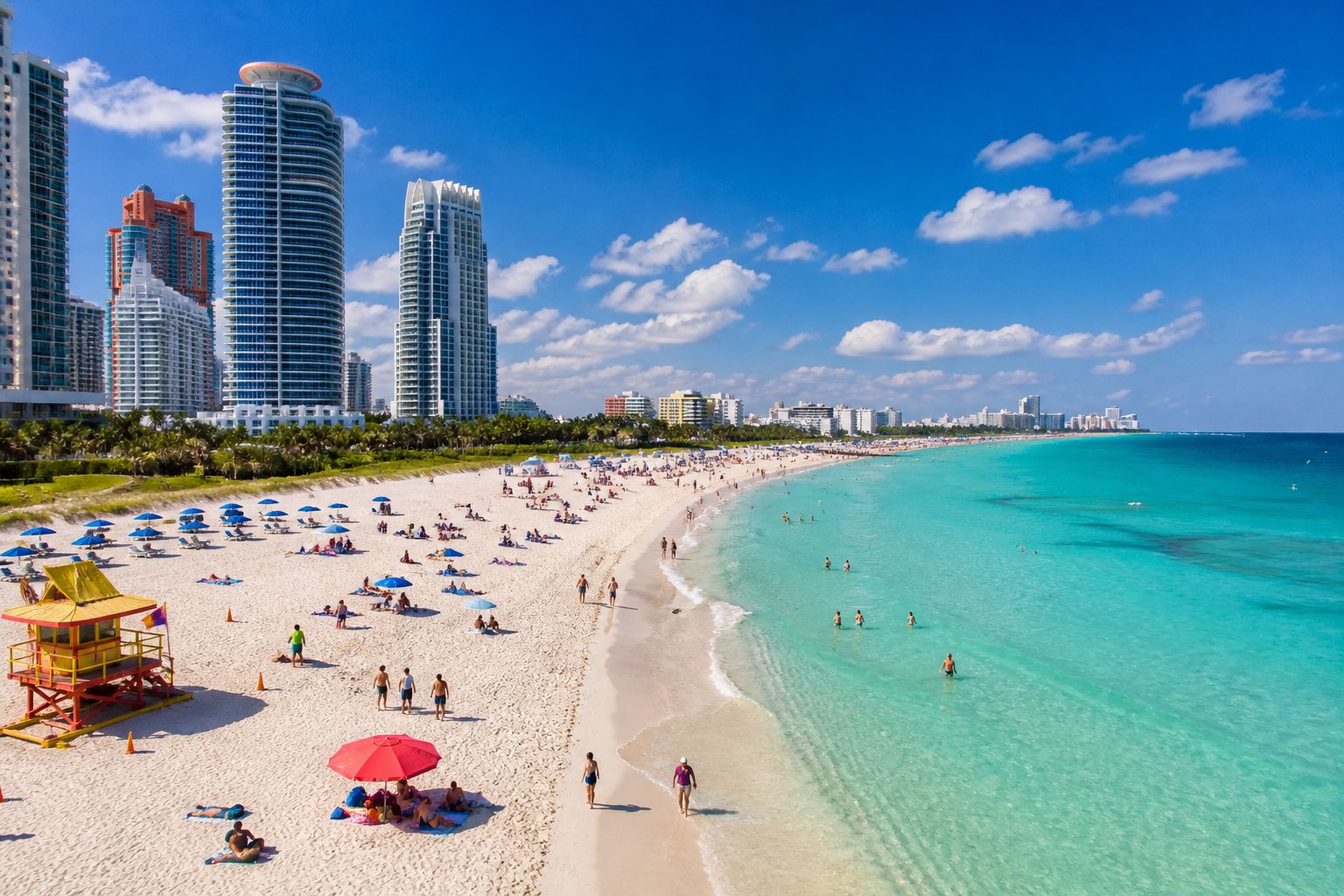
Miami’s beaches — including South Beach, Crandon Park, and Bill Baggs Cape Florida State Park — are widely considered among the most desirable urban beaches in the United States.
They combine:
- accessibility,
- natural beauty,
- warm water,
- year-round usability.
South Beach is the most internationally recognized, known for:
- wide sandy beaches,
- turquoise Atlantic water,
- a lively social atmosphere mixing residents, professionals, tourists, and influencers.
For many locals, the beach becomes part of daily life — from morning workouts and jogging to evening walks along Ocean Drive.
Crandon Park, located on Key Biscayne, offers a quieter and more family-oriented environment with calmer water, picnic areas, nature paths, and extensive greenery.
Further south, Bill Baggs Cape Florida State Park provides one of the region’s most scenic and less crowded beach experiences, featuring:
- a historic lighthouse,
- nature trails,
- shaded picnic areas,
- panoramic ocean views.
One of Miami’s biggest advantages is how close many residential areas are to the coastline.
Neighborhoods such as:
- South Beach,
- Edgewater,
- Brickell,
- Key Biscayne
offer relatively quick ocean access, making beachfront or near-beach living realistic for both homeowners and renters.
This accessibility strongly supports property values and rental demand, especially for buyers focused on lifestyle-driven real estate.
Miami’s beach culture also extends beyond recreation.
Residents regularly participate in:
- paddleboarding,
- jogging,
- volleyball,
- cycling,
- boating,
- water sports.
Unlike many coastal cities with short warm seasons, Miami’s beaches remain active throughout the entire year.
For people who prioritize ocean access, climate, and outdoor living, Miami’s beaches are not simply an amenity — they are one of the city’s defining lifestyle features.
Things to Do in Miami
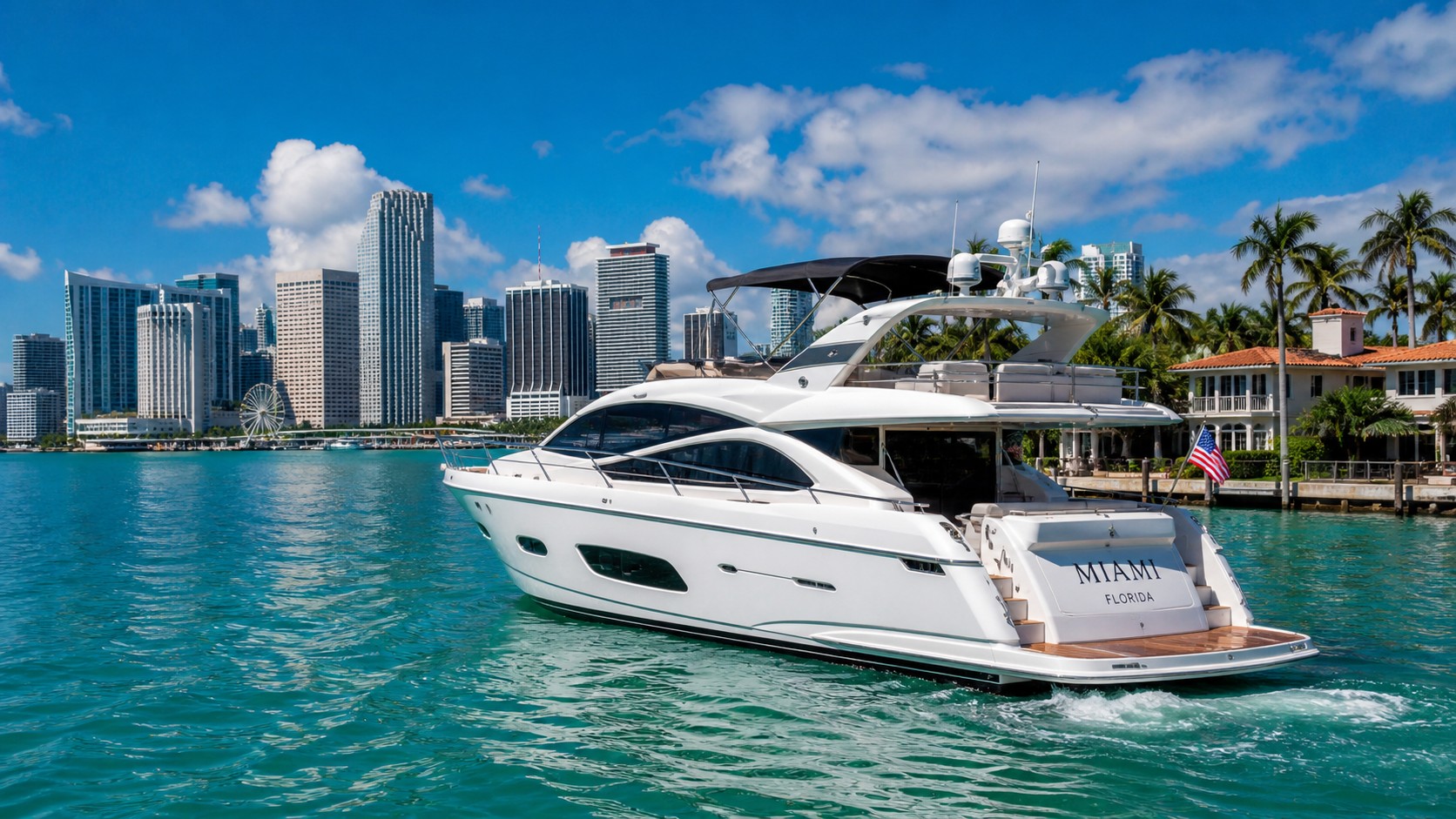
Outdoor activities
Beyond the beaches, Miami offers a wide range of outdoor experiences.
Popular activities include:
- airboat tours through the Everglades,
- kayaking in Biscayne National Park,
- hiking in Oleta River State Park,
- visiting Fairchild Tropical Botanic Garden.
Water sports such as:
- jet skiing,
- sailing,
- boating,
- paddleboarding,
- deep-sea fishing
are also highly accessible because of the city’s coastal geography.
Cultural attractions
The Pérez Art Museum Miami focuses on contemporary art connected to the Americas and regularly hosts major exhibitions.
The Vizcaya Museum & Gardens features a historic Italian Renaissance-style villa surrounded by elaborate formal gardens overlooking Biscayne Bay.
The Adrienne Arsht Center hosts Broadway productions, ballet performances, symphony concerts, and other major cultural events.
Little Havana remains one of Miami’s strongest cultural experiences through live music, Cuban cafés, cigar shops, art galleries, and recurring events such as Viernes Culturales.
Dining
Miami’s dining scene reflects the city’s international identity.
Popular culinary references include:
- Versailles Restaurant in Little Havana, often called the unofficial capital of Cuban cuisine in Miami;
- upscale restaurants in Brickell and the Design District;
- experimental and chef-driven dining in Wynwood;
- food halls such as Time Out Market and Lincoln Eatery;
- food trucks and local farmers markets throughout the city.
The overall food scene blends Latin American, Caribbean, Asian, Mediterranean, and contemporary American influences into one of the most diverse culinary environments in the United States.
Main Universities and Colleges in Miami
University of Miami
This private research university in Coral Gables enrolls approximately 20,000 students across undergraduate and graduate programs.
It is particularly known for:
- medicine,
- marine science,
- business,
- law,
- music.
The campus is recognized for Mediterranean Revival architecture, palm-lined walkways, and strong research funding.
Florida International University (FIU)
FIU serves more than 54,000 students across multiple campuses.
The university is especially strong in:
- business,
- engineering,
- hospitality,
- international relations,
- public affairs.
Its programs are closely connected to Miami’s role as an international business hub and gateway to Latin America.
Miami Dade College (MDC)
One of the largest colleges in the United States, MDC enrolls nearly 59,000 students.
It serves as a major educational gateway for Miami’s multicultural population and is recognized as one of the country’s leading producers of Hispanic and minority graduates.
MDC also plays a major role in workforce development and transfer pathways into four-year universities.
Private Colleges and Specialized Institutions
Barry University
This private Catholic university enrolls approximately 7,000 students and offers more than 100 academic programs with strong emphasis on:
- nursing,
- health sciences,
- law,
- liberal arts.
St. Thomas University
Located in Miami Gardens, the university offers more than 60 undergraduate, graduate, and law programs with strong emphasis on leadership, ethics, social justice, and career preparation.
Johnson & Wales University – Miami
The North Miami campus specializes in:
- hospitality,
- culinary arts,
- business,
- food innovation.
It is especially attractive for students pursuing careers tied to Miami’s tourism and hospitality industries.
Art and Design Schools
Miami International University of Art & Design
This institution focuses on applied arts, design, media, and creative industries, offering career-oriented programs within Miami’s growing artistic environment.
New World School of the Arts
This conservatory-style institution trains students in:
- dance,
- music,
- theater,
- visual arts.
It operates through a partnership between Miami Dade College and the University of Florida and also functions as a public arts magnet high school.
Medical and Professional Schools
Herbert Wertheim College of Medicine (FIU)
Established in 2006, this medical school places strong emphasis on community healthcare, public medicine, and underserved populations.
University of Miami Miller School of Medicine
Founded in 1952, it was Florida’s first medical school and remains one of the state’s leading research institutions with strengths in:
- cancer research,
- diabetes,
- ophthalmology,
- neurology.
💡 Expert Perspective
Miami’s universities attract not only local students, but also international students, researchers, entrepreneurs, and medical professionals.
For families considering relocation, the city offers a broad educational ecosystem — from community colleges to internationally recognized research universities.
Ready to make the move?
Key Considerations Before Relocating
- Visit in different seasons: Miami’s summer humidity and hurricane season from June through November create a very different experience compared to winter tourism. A short winter trip may not fully reflect everyday life during the hotter and wetter parts of the year.
- Research neighborhoods thoroughly: Commute times, school quality, safety, walkability, and lifestyle vary dramatically depending on the neighborhood. Living in Brickell feels very different from living in Coconut Grove, Coral Gables, Aventura, or Key Biscayne.
- Calculate true costs:
It’s important to account not only for rent or mortgage payments, but also:
- hurricane insurance,
- flood zones,
- HOA fees,
- parking costs,
- elevated utility bills,
- property taxes.
These additional expenses can significantly affect long-term affordability.
- Secure employment first:
The job market can be competitive, and remote work flexibility often improves quality of life in a city known for traffic congestion.
Many newcomers underestimate how much commuting patterns influence everyday living in Miami.
Miami rewards people who embrace its energy, diversity, climate, and international atmosphere while accepting its costs and urban intensity.
The city is not ideal for everyone — especially people prioritizing affordability, quiet suburban routines, or highly efficient public transportation.
However, for individuals and families who value:
- cultural vibrancy,
- outdoor living,
- ocean access,
- international connectivity,
- year-round warmth,
and who can comfortably afford the premium, Miami offers a quality of life few American cities can replicate.
Ultimately, the decision comes down to your priorities, budget, and comfort with fast-paced urban living.
Research carefully, visit during multiple seasons, and speak with current residents whenever possible.
With realistic expectations and thoughtful planning, the Magic City can genuinely become home.
Miami rewards those who embrace its energy, diversity, and opportunities while accepting its costs and challenges. The city isn't for everyone - those seeking affordability, quiet suburbs, or efficient public transit should look elsewhere. But for individuals and families who prioritize cultural vibrancy, outdoor lifestyle, and international connectivity, and who can afford the premium, Miami offers a quality of life that few American cities can match.
The decision ultimately depends on your priorities, budget, and tolerance for urban intensity. Research thoroughly, visit during different seasons, and connect with current residents. With realistic expectations and careful planning, the Magic City can become your home.
FAQs
Is Miami a good place to live?
That depends on your priorities, lifestyle preferences, and financial situation.
Miami is especially attractive for people who value:
- warm weather,
- beach access,
- cultural diversity,
- international business opportunities,
- outdoor living,
- nightlife and entertainment.
At the same time, high housing costs, traffic congestion, humidity, and hurricane risks are all real factors that should be considered carefully.
Many residents describe Miami as one of the most exciting places they have ever lived — but only if they can comfortably afford the lifestyle and genuinely enjoy the city’s fast pace and constant activity.
What salary do you need to live in Miami?
| Lifestyle | Estimated Annual Income Needed |
| Single person (comfortable lifestyle) | $100,000-$110,000 |
| Family of four (comfortable lifestyle) | $230,000+ |
| To afford median-priced home | $135,000+ household income |
| Premium lifestyle | $120,000-$140,000+ |
These estimates follow the standard 50/30/20 budgeting approach:
- 50% for needs,
- 30% for discretionary spending,
- 20% for savings and investments.
Although Florida has no state income tax, housing remains the city’s largest financial pressure point.
📊 The Data
Miami’s median home price reached approximately $574,000–$699,000 in early 2026, depending on the source and methodology used.
The city’s cost of living remains roughly 21% above the national average, while housing costs are approximately 60% higher than the U.S. median.
The metropolitan population now exceeds 6.4 million and continues to grow steadily.
These numbers reflect a clear reality: Miami remains expensive, highly competitive, internationally desirable, and consistently in demand.