
 https://bonadomus.com/storage/14710/rent-buying-houses.jpg 1280w
https://bonadomus.com/storage/14710/rent-buying-houses.jpg 896w
https://bonadomus.com/storage/14710/rent-buying-houses.jpg 627w
https://bonadomus.com/storage/14710/rent-buying-houses.jpg 1280w
https://bonadomus.com/storage/14710/rent-buying-houses.jpg 896w
https://bonadomus.com/storage/14710/rent-buying-houses.jpg 627wHousing Affordability Crisis: Why Buying Real Estate Is Becoming More Advantageous Than Renting in Miami and Suburbs
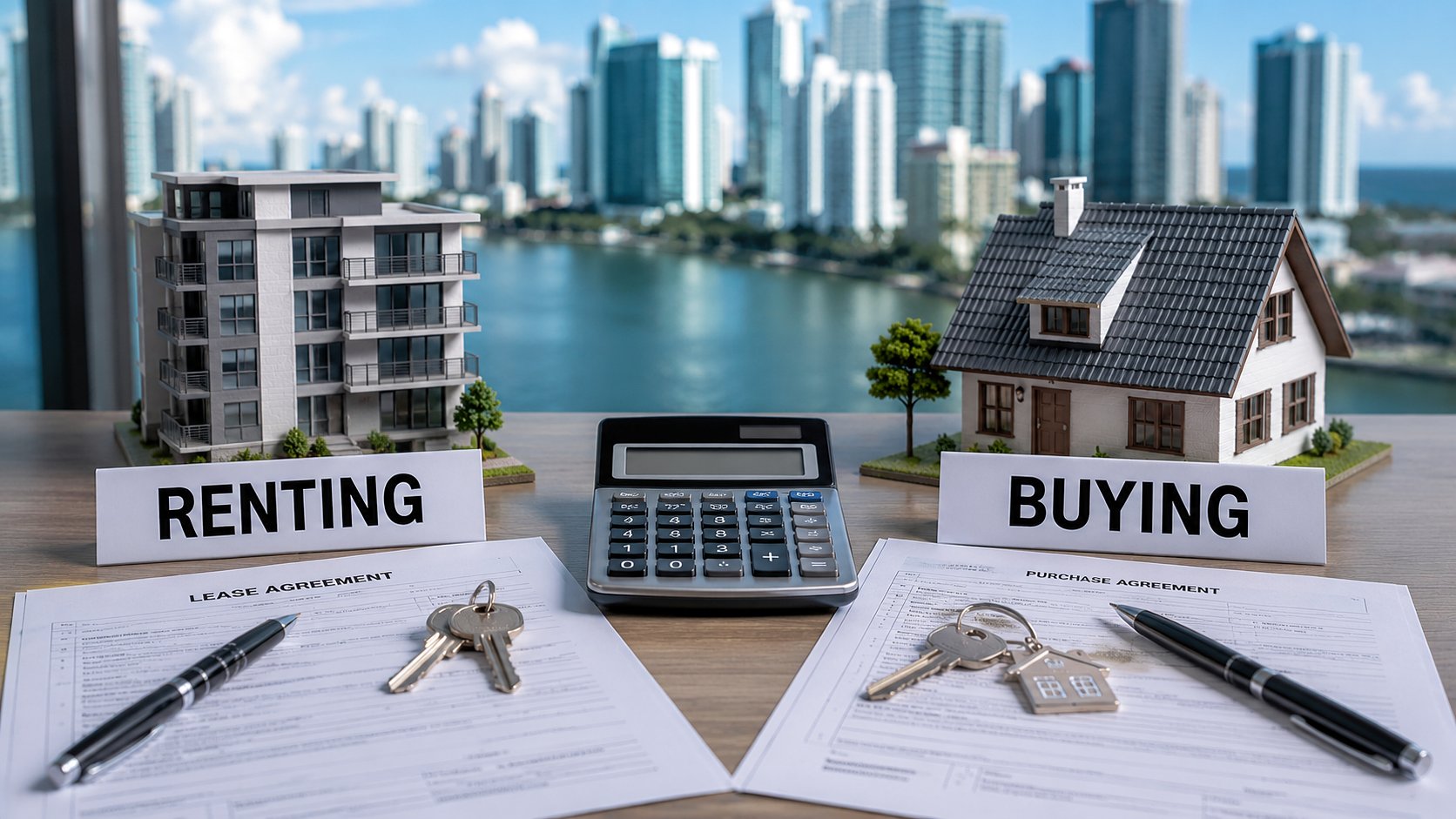
The housing affordability crisis in the USA is increasing interest in buying rather than renting. In South Florida, including Miami, Hialeah, and North Miami, rising rental rates make buying a more beneficial strategy with the right property choice and a long-term approach.

April 21, 2026

6 minutes

April 19, 2026
The housing affordability crisis in recent years has become one of the key economic problems in the USA. Rising property and rental prices, increasing mortgage interest rates, and lagging household incomes have created a situation in which a significant portion of households experience financial burdens related to housing. Some estimates note that millions of families are forced to spend more than 30% of their income on rent or housing costs, which traditionally is considered the threshold for financial stress.
Against this backdrop, interest is growing in an alternative strategy — buying real estate instead of renting. This is especially noticeable in large metropolitan areas such as South Florida, where the market includes not only central Miami but also surrounding cities, including Hialeah and North Miami. These areas form a single economic cluster but differ significantly in entry costs into the real estate market and in demand structure.
Rising rental costs as a long-term pressure factor
The rental market in large U.S. cities continues to show steady price increases. For renters, this means not only a high current financial burden but also no fixing of expenses in the long term. Unlike mortgages, rental rates are not fixed and can be revised annually, and with limited housing supply, price growth can outpace income growth.
As a result, renting gradually ceases to be a neutral financial decision and turns into a significant long-term expense item. For many families, this means that a considerable portion of income goes to housing payments without building any equity or ownership.
Buying real estate as an alternative to renting
Against the backdrop of rising rental rates, purchasing a home is increasingly viewed not only as an investment but also as a way to stabilize expenses. When acquiring property using a mortgage loan, the monthly payment can be comparable to the rental rate, especially in the mid-range housing segment.
The key difference is the structure of expenses. In the case of renting, all funds go to the landlord. In the case of buying, part of the monthly payment builds the owner's equity, gradually increasing their ownership share in the property.
An additional factor is the possibility of fixing housing costs through a mortgage. Even with market fluctuations, the monthly loan payment remains stable, reducing dependence on inflationary processes and rising rental prices.
The importance of choosing the right property
Despite the potential advantages of buying, the key factor remains the quality of the chosen property. Real estate cannot be considered solely through the lens of purchase price. The financial ownership model is formed from many components:
- property cost
- mortgage interest rate
- property tax
- home insurance
- mandatory fees (including HOA in some complexes)
- maintenance and repair expenses
- liquidity of the property and its potential for value growth
This is especially important in regions with high climate and insurance burdens, where ownership costs can differ significantly even at the same purchase price.
Thus, buying real estate can be profitable only with a thorough analysis of all associated costs and a long-term residency strategy.
The role of suburbs and alternative locations
The geography of decision-making deserves special attention. Given the high costs in central districts, more buyers are considering not only Miami itself but also surrounding cities such as Hialeah and North Miami.
These areas often offer more affordable entry into the real estate market while maintaining proximity to the region's economic center. As a result, a model forms in which buyers balance price, transportation accessibility, and housing quality.
However, a lower price does not always mean a more advantageous purchase. In some cases, additional expenses for property maintenance, insurance, and taxes can significantly change the total cost of ownership.
When buying is truly more advantageous than renting
The economic feasibility of buying real estate depends not only on market conditions but also on individual financial situations. In practice, buying becomes a more beneficial strategy under certain conditions:
- long-term residence (usually from 5 years or more)
- stable income
- adequate mortgage interest rate
- absence of excessive additional maintenance costs
- proper choice of a property with the potential to retain or increase in value
Under such conditions, purchasing allows not only to stabilize monthly expenses but also to form a long-term asset.
Conclusion
The modern housing market in the USA creates a new reality where renting increasingly becomes an expensive and less predictable strategy, while buying property is a tool for long-term financial stabilization.
However, the key factor remains not the mere fact of buying, but the quality of the chosen property and the correctness of the financial model. In large metropolitan areas, such as South Florida, including Miami and the adjacent cities of Hialeah and North Miami, it is the analysis of all deal parameters that determines whether buying will truly be more advantageous than renting or become an additional financial burden.
As a result, the real estate market is increasingly shifting from a simple dichotomy of "rent or buy" to a more complex model — the choice of the optimal property and ownership strategy in the context of a changing housing economy.