
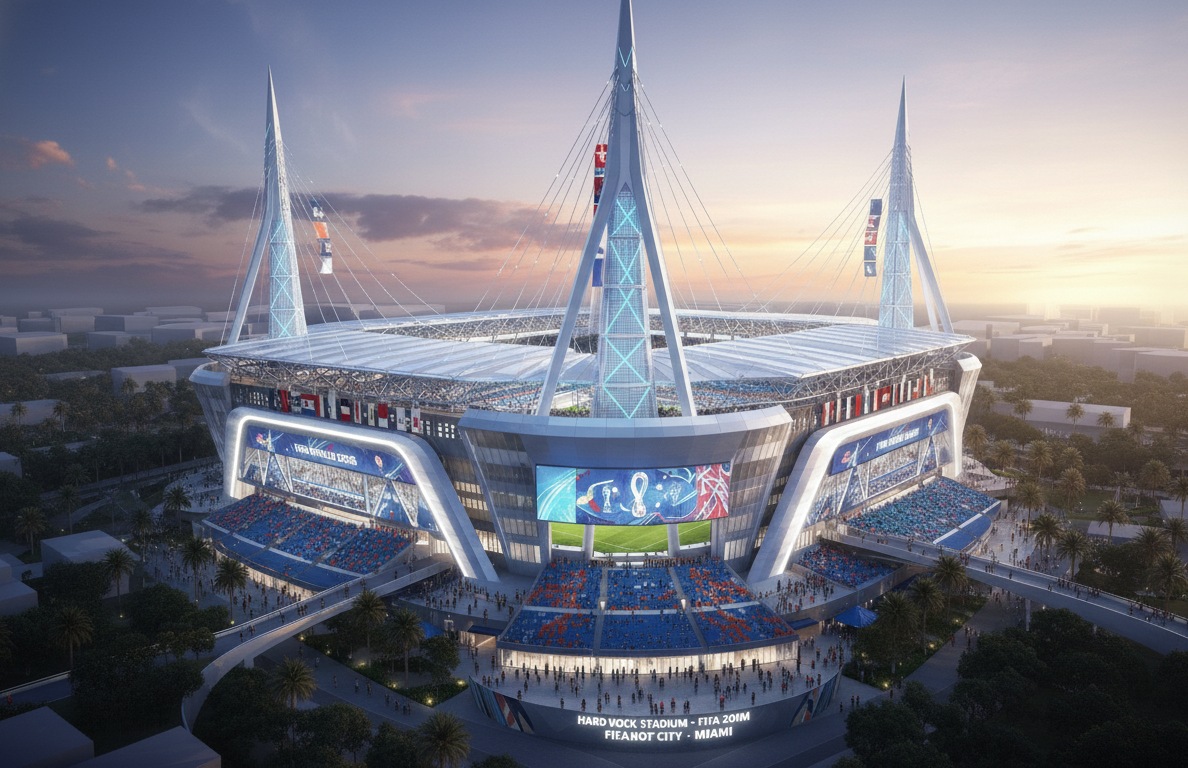
FIFA 2026 Boosts Miami Real Estate: How the World Cup is Changing Investment, Rentals, and City Development
Miami prepares for the 2026 FIFA World Cup. Surge in short-term rentals, billion-dollar projects like Miami Freedom Park, and growing investor interest from Latin America. How to profit from the sports boom – read our analysis.

May 26, 2026

6 minutes

May 26, 2026
Miami is set to become one of the key host cities for the 2026 FIFA World Cup, and the tournament's impact is already reshaping South Florida's real estate market. This goes beyond a temporary tourist surge during matches – it's about long-term changes: infrastructure development, mixed-use projects, and increased interest from investors and international buyers.
During the 2026 FIFA World Cup, Miami will host seven matches at Hard Rock Stadium, and the city expects a multi-billion dollar economic impact from the global sporting event. According to organizers and market participants, the championship will significantly enhance Miami's international image as a hub for tourism, luxury lifestyle, and investment.
Miami Freedom Park and the Infrastructure Boom Ahead of FIFA 2026
One of the largest projects tied to the soccer boom is Miami Freedom Park – a $1 billion mixed-use development next to Miami International Airport. The complex is being built around the new Inter Miami CF stadium and includes retail zones, offices, a 750-room hotel, restaurants, entertainment spaces, and a 58-acre public park. Developers expect the area to become a new magnet for tourists and business ahead of FIFA 2026.
Although World Cup matches won't be played at Freedom Park, analysts believe the project will benefit from the massive influx of international fans and sports tourism. Thanks to its location near the airport and Tri-Rail/Metrorail transit hubs, the area gains strategic importance for further development of commercial real estate and the hospitality segment.
Similar processes are happening in other hotspots. For example, in Miami Beach, Brickell, and Downtown, developers are accelerating the launch of new residential complexes aimed at international fans and long-term investors.
Surge in Short-Term Rentals and New Investment Strategies
Investors are paying close attention to the short-term rental market. According to local reports, South Florida has already become one of the most active short-term rental markets among all FIFA 2026 host cities. Some matches, including Brazil vs Scotland, triggered a sharp rise in housing bookings months before the tournament.
Developers are increasingly promoting condo-hotel and flexible ownership models. For instance, Domus Brickell Park started offering FIFA World Cup tickets as a bonus for property buyers. According to the New York Post, this marketing strategy accelerated sales of luxury units among buyers from Latin America.
For investors, this creates opportunities: buying apartments or penthouses in high-tourism areas (such as Sunny Isles Beach, Bal Harbour, Coconut Grove) can yield 30–50% higher returns from short-term rentals compared to traditional leases.
Experts note that the impact of major sporting events on Miami's real estate market goes far beyond short-term tourist demand. A similar effect was seen after the arrival of the Formula 1 Miami Grand Prix, which boosted developer interest in areas around Hard Rock Stadium and spurred mixed-use and hospitality projects. Analysts believe FIFA 2026 will further amplify this trend.
The Messi Effect and Long-Term Prospects for Miami's Market
The global image of Miami received a major boost from Lionel Messi's move to Inter Miami CF. After the Argentine star arrived, interest in the club, sports tourism, and Miami's luxury lifestyle surged. The Wall Street Journal called Messi "Miami's billion-dollar economic engine," highlighting his impact on the city's hospitality, retail, and real estate sectors.
The strongest effects of FIFA 2026 are likely to appear in several areas simultaneously:
- increased demand for short-term rentals;
- growth of the luxury hospitality segment;
- rising interest from international investors (especially Latin America, Europe, and Asia);
- development of mixed-use real estate;
- appreciation of properties near key infrastructure and entertainment clusters.
Some experts warn of potential risks. Miami residents are already discussing traffic congestion, strain on the transit system, and rising home prices near new sports facilities. Around Miami Freedom Park, there is active debate about future traffic issues and potential gentrification of neighboring areas like Wynwood and Little Havana.
Nevertheless, most market participants believe that the FIFA World Cup 2026 will be more than just a sporting event for Miami – it will be another catalyst in the city's transformation into a global hub for luxury lifestyle, international tourism, and real estate. If you're considering buying a house, villa, or townhouse in South Florida, now is a good time to invest in neighborhoods poised to benefit from the World Cup.