
 Whatsapp
 Call
Call
Who Should Consider Buying in Miami Beach?
Miami Beach is better suited to buyers who want daily access to the ocean, walkable streets and a city rhythm built around outdoor living. It is a strong fit for:
- Full-time residents who want to live near the ocean in a walkable, urban environment,
- Second-residence buyers looking for a market with consistent international demand,
- Investors interested in holding property in a location with deep long-term recognition,
- Relocating buyers (from other U.S. states or abroad) who want Florida residency benefits to be part of the broader ownership conversation.
For buyers who prefer quiet streets, larger lots and a slower pace, the match is more specific: North Beach, certain waterfront residential pockets or single-family areas away from the main corridors.
South Beach, Mid-Beach and North Beach: What Changes for Buyers?
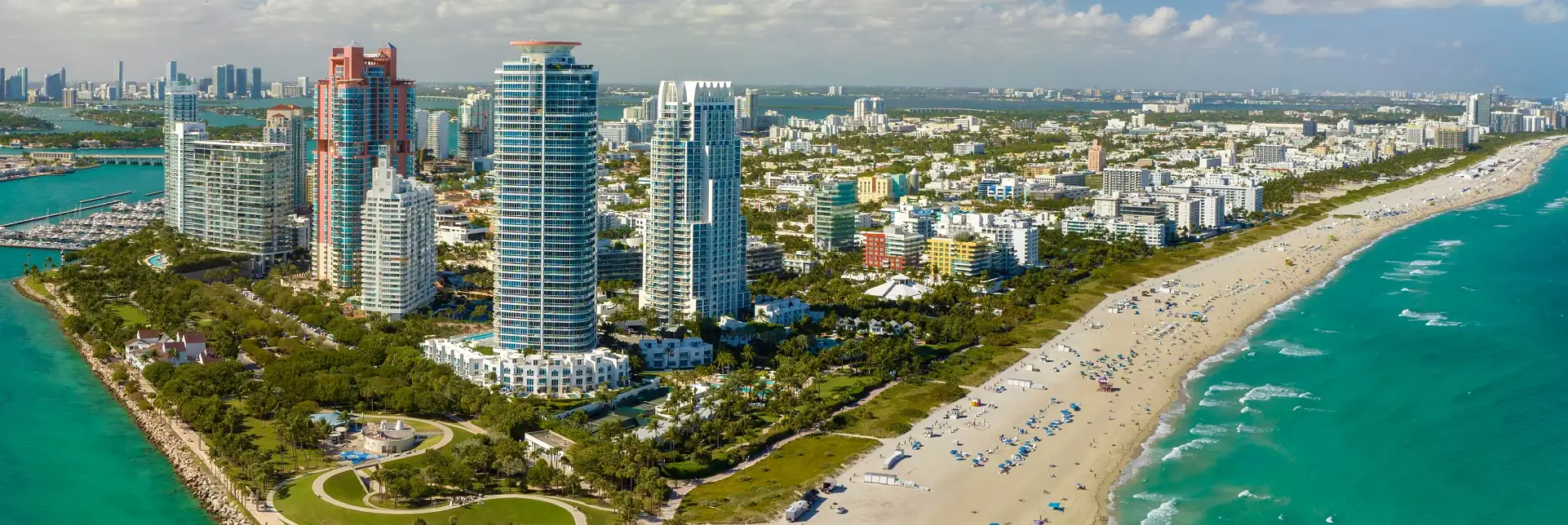
SOUTH BEACH
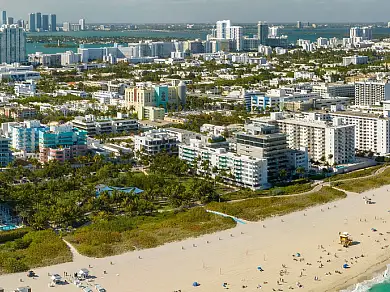
The most walkable, most active part of Miami Beach.
Here, the buyer is close to the city’s best-known pedestrian corridors, beach parks and historic streetscapes. The pace is urban and social – restaurants, nightlife, fitness, beach access all within walking distance. Buyers here tend to value density and convenience over quiet.
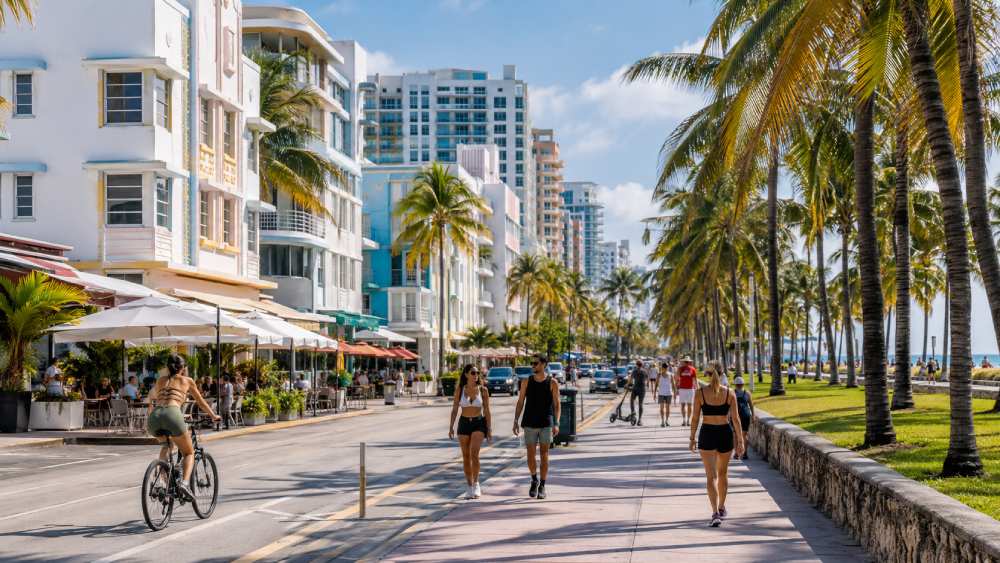
Median asking price: ~$509,000. Best for:
- first-time Miami Beach buyers,
- urban lifestyle buyers,
- those wanting a lower entry point.
Watch for:
- higher HOA fees relative to building age,
- buildings in the Historic District have exterior renovation restrictions.
Compact and mid-size condos dominate the inventory. Entry prices are lower than Mid-Beach, but total ownership costs – HOA fees, insurance, assessments – still need to be reviewed carefully before any offer.
MID BEACH
The premium segment. Bigger buildings, stronger services and more to evaluate before you commit.
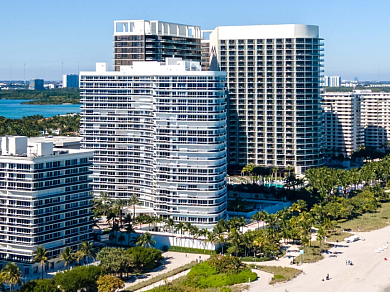
Mid-Beach is quieter than South Beach and more resort-like in feel. Oceanfront buildings here are larger, beach access is less crowded and the atmosphere is closer to a full-service residential environment. Branded residences and hotel-style amenity packages are more common here than anywhere else in Miami Beach.
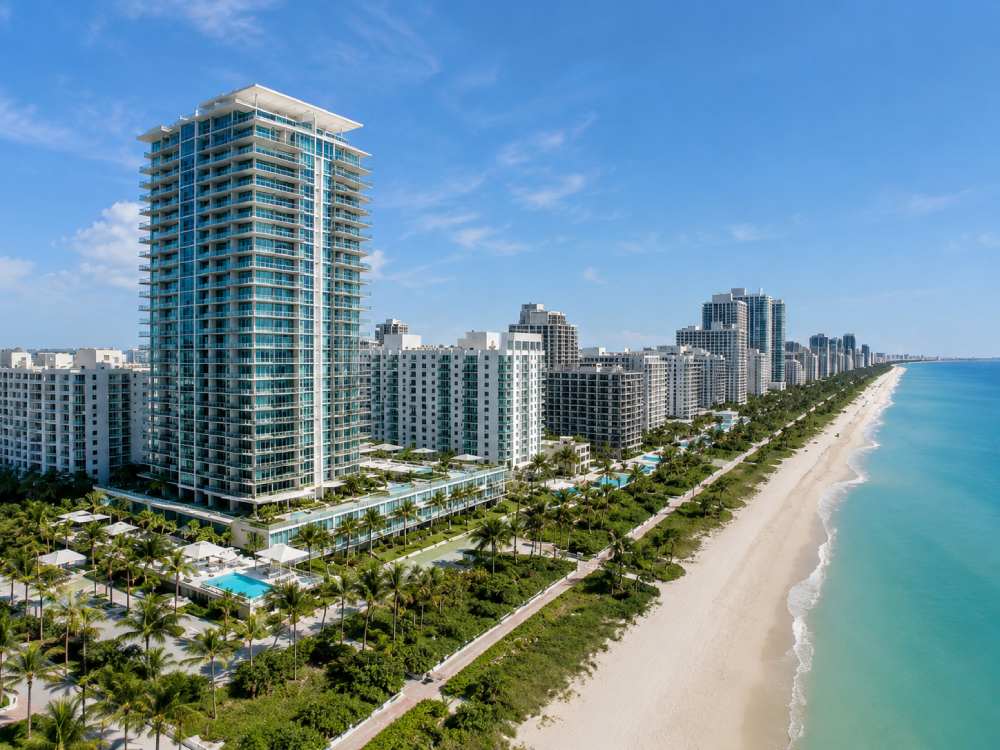
Median asking price: ~$849,000. Best for: buyers prioritizing building services and ocean views.
Watch for: in some buildings, HOA fees alone run $2,000–$3,000/month – always model total ownership cost, not just the purchase price.
The price gap between a standard unit and a full-service oceanfront residence can be significant. Buyers should compare not just price per square foot, but also HOA fees, reserve fund status, parking type, building age and any pending special assessments.
NORTH BEACH
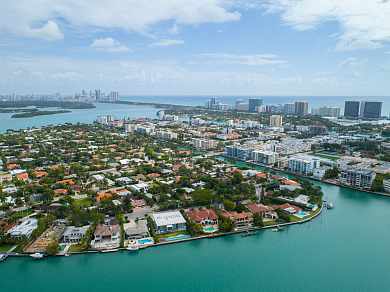
Calmer, more local in feel – and more varied than it looks from the outside.
North Beach draws buyers who want ocean proximity without the density and activity of the southern parts of the city. The pace is slower, streets are quieter and the day-to-day environment feels more residential.
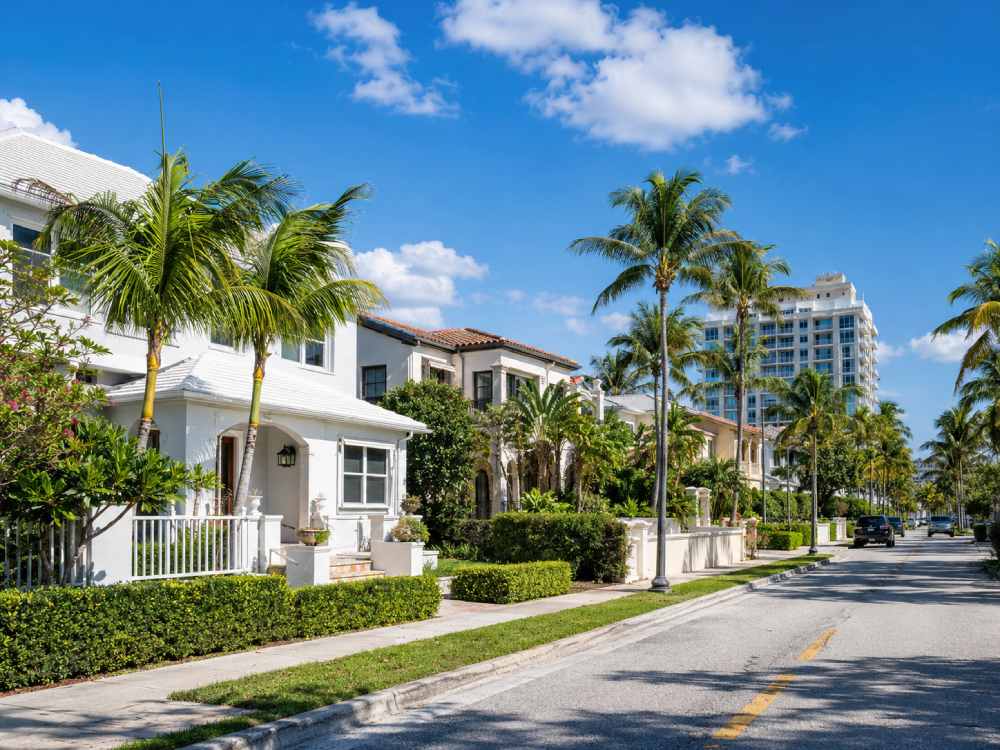
Median asking price: ~$749,000 (wide internal range). Best for:
- buyers wanting a calmer coastal setting,
- families,
- value-oriented buyers willing to trade walkability for space.
Watch for: the range inside North Beach is significant – a boutique condo, a renovated mid-rise and a waterfront single-family home can sit in the same area but represent completely different budgets and buyer profiles.
Property Types Buyers Usually Compare in Miami Beach
Buildings with direct or near-direct beach access, views and a full amenity package. Often favored by buyers who want a lock-and-leave setup with services included.
Boutique condo buildings.
Smaller residential buildings with fewer units, typically preferred by buyers who want a quieter environment than a large high-rise.
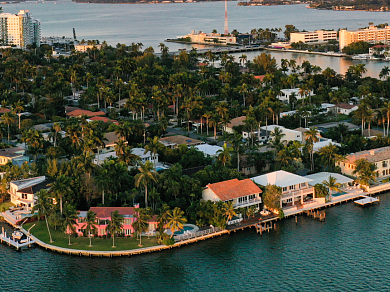
Waterfront single-family properties.
For buyers who prioritize privacy, outdoor space and water access in a more residential setting.
Bayfront and waterfront villas.
A limited luxury segment where lot size, bay frontage, dock potential and "no fixed bridges" access (meaning larger vessels can pass through without obstruction) can strongly influence value.
What Affects Real Estate Prices in Miami Beach?
Two properties that look similar online can have a drastically different total cost of ownership. Key factors include:
Building age and structural condition.
For condos, buyers should review completed safety inspections, reserve studies, recent repairs and any outstanding or anticipated special assessments – particularly important under Florida's updated building inspection requirements.
Monthly ownership costs.
HOA fees, property insurance, flood insurance, property taxes and building services can materially change your monthly budget. In some Mid-Beach buildings, HOA fees alone exceed $2,000–$3,000 per month.
Flood-zone and elevation exposure.
Flood zone classification affects insurance requirements and premiums directly. This should be verified before submitting an offer, not after.
View quality and waterfront position.
Ocean view, bay view, Intracoastal exposure, direct waterfront access, dock potential and "no fixed bridges" positioning can each shift value by 20–30% or more within the same building or block.
Parking and building services.
Assigned parking, valet, security, concierge, pools and fitness areas all affect both lifestyle and monthly fees. In Miami Beach, parking is almost never free – it is either included in HOA or billed separately.
A lower asking price is not always the better purchase. A property with stronger reserves, more predictable ownership costs and a cleaner building history often represents better value than a cheaper unit with hidden future expenses.
How Bonadomus Helps Buyers in Miami Beach
Real estate agency Bonadomus has worked the Miami Beach residential market for over 17 years, with more than 2,300 transactions completed across South Florida. Our team holds a Florida Real Estate Sales Associate License and works exclusively with residential buyers and sellers.
For buyers in Miami Beach, we help with:
- Neighborhood and building comparison – sub-area positioning, building quality, ownership cost modeling
- HOA and reserve review – reading condo documents, reserve studies, meeting minutes and pending assessments before you commit
- Offer, negotiation and contract – based on recent comparable sales (comps) and current market conditions
- Due diligence and closing – coordinating inspections, title search, escrow and the full closing process

Miami Beach: City, Climate and Lifestyle
If you want to swim in January, walk the beach in March and be outside in shorts in November, Miami Beach makes that possible every single year.
Beaches
Fine sand, warm ocean water and roughly 8 miles of Atlantic coastline – plus the oceanfront Beachwalk running the full length of the city.
Architecture
Miami Beach has the largest concentration of Art Deco buildings in the world — more than 800 structures built between the 1920s and 1940s, most of them in South Beach. It is essentially a walkable open-air museum.
Nightlife and dining
South Beach alone has more rooftop bars, restaurants and clubs per block than most cities have in an entire downtown. For buyers who want that energy nearby, it is there. For buyers who do not, Mid-Beach and North Beach sit well outside it.
Climate
Average winter temperatures around 75°F. No heating season. The ocean is swimmable year-round.