
 https://bonadomus.com/storage/14909/Miliarders-v-Miami-Florida.jpg 1280w
https://bonadomus.com/storage/14909/Miliarders-v-Miami-Florida.jpg 896w
https://bonadomus.com/storage/14909/Miliarders-v-Miami-Florida.jpg 627w
https://bonadomus.com/storage/14909/Miliarders-v-Miami-Florida.jpg 1280w
https://bonadomus.com/storage/14909/Miliarders-v-Miami-Florida.jpg 896w
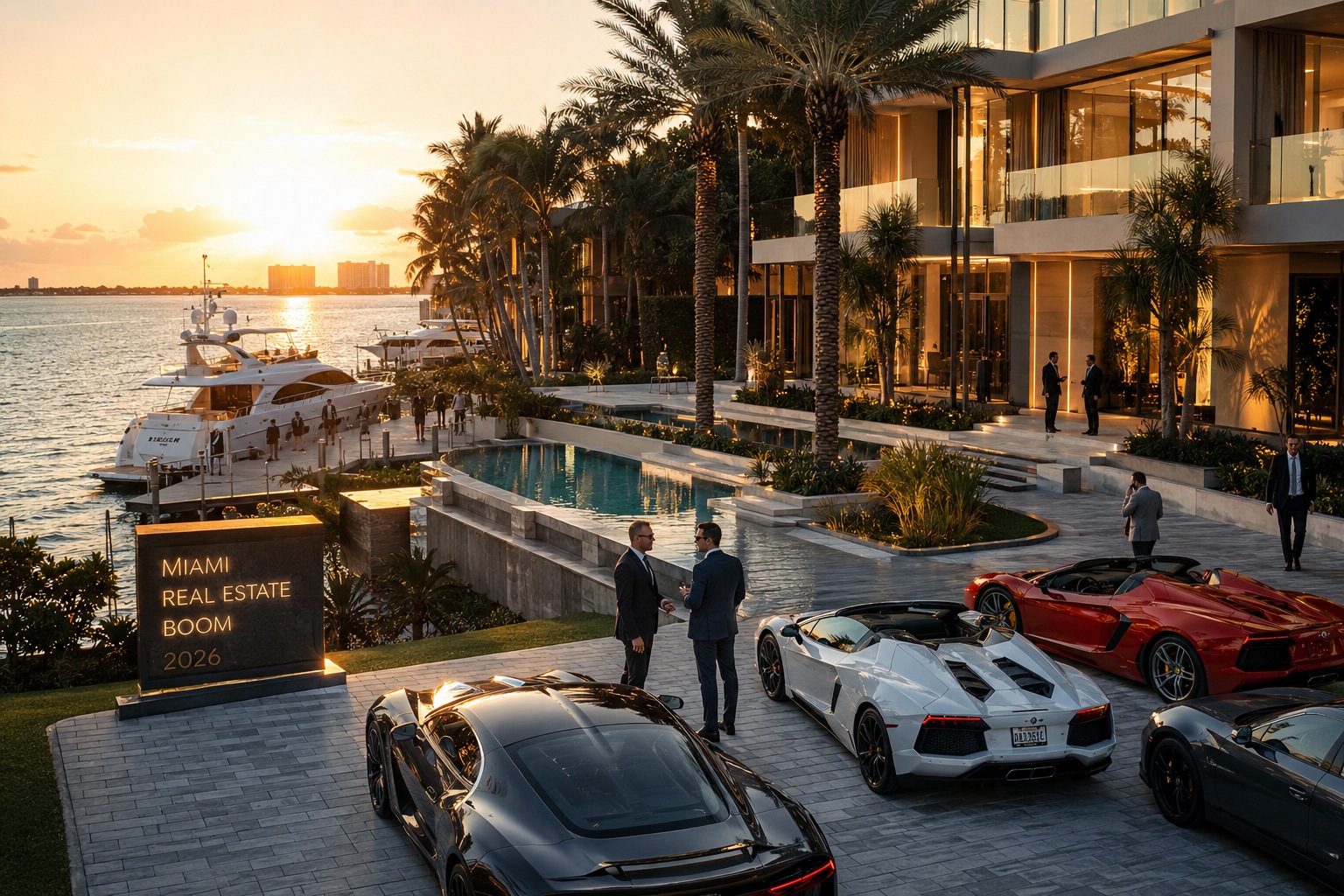
https://bonadomus.com/storage/14909/Miliarders-v-Miami-Florida.jpg 627wBillionaires Keep Buying Florida Real Estate: Miami Solidifies Status as Ultra-Luxury Hub
Florida remains the top destination for ultra-wealthy buyers. In 2025–2026, the Miami market set new price records: billionaires are purchasing waterfront estates and luxury penthouses for tens to hundreds of millions of dollars.

May 21, 2026

5 minutes

May 19, 2026
Florida remains one of the premier destinations for ultra-wealthy real estate buyers in the U.S. In 2025–2026, the Miami and South Florida market continued setting new price records. Billionaires, hedge fund managers, tech founders, and celebrities are purchasing waterfront estates, private islands, and luxury penthouses worth tens to hundreds of millions of dollars.
One of the most talked-about deals of the year was Mark Zuckerberg’s purchase. According to Redfin and the Miami Herald, the Meta founder acquired a mansion for $170 million on Indian Creek Island—a private island often dubbed the “Billionaire Bunker.”
The home sits on a two-acre waterfront lot and features nine bedrooms, a private dock, a large pool, and nearly 28,000 square feet of living space. The transaction became the most expensive residential sale in Miami-Dade County history.
Indian Creek Island is considered one of South Florida’s most exclusive and expensive neighborhoods. The island hosts around 40 waterfront estates, its own police department, and a private country club. Previously, investors, tech executives, and prominent business figures have purchased property here.
Billionaire interest in Miami stems from several key factors:
- no state income tax in Florida;
- warm climate;
- high privacy;
- international city status;
- strong luxury real estate growth;
- favorable relocation conditions from New York and California.
According to the New York Post, after discussions about new taxes on high-end real estate in New York, wealthy buyers began relocating residences to Florida more actively. The luxury project Perigon Miami Beach alone generated over $70 million in sales to New York buyers last month.
Demand for ultra-luxury condominiums is also rising. Buyers are choosing oceanfront penthouses, branded residences, and private residential towers with limited unit counts.
In May, a full-floor penthouse at Rivage Bal Harbour went under contract for $68.3 million. The residence spans approximately 12,500 square feet across an entire floor and includes a private elevator, panoramic ocean views, and nearly 1,400 square feet of outdoor space.
Among the neighborhoods especially popular with ultra-high-net-worth (UHNW) buyers are:
- Miami Beach;
- Bal Harbour;
- Sunny Isles Beach;
- Brickell;
- Coconut Grove;
- Fisher Island;
- Indian Creek Island.
In Coconut Grove, a $101.5 million waterfront estate spanning 4.5 acres closed in late 2025. In Miami Beach, a property on La Gorce Circle sold for over $74 million.
Analysts note that billionaire preferences are gradually shifting. While luxury real estate once emphasized scale and conspicuous opulence, today’s buyers increasingly prioritize:
- privacy;
- wellness infrastructure;
- private spas;
- chef’s kitchens;
- security;
- smart-home systems;
- low-density buildings;
- large waterfront lots.
Luxury developer Manny Varas, known in the U.S. as the “Billionaire’s Builder,” observes that wealthy clients now frequently request private wellness spaces instead of traditional entertainment rooms.
The ultra-luxury real estate market remains one of South Florida’s most resilient segments—even amid high mortgage rates and rising insurance costs. According to Redfin, Florida and California claimed eight of the top 10 most expensive U.S. home sales in 2025.
For Miami, this means further solidification as a global luxury hub. At the same time, the gap between the ultra-luxury segment and the broader residential market continues to widen, with affordability remaining a critical challenge for local residents and renters.