City of Miami: about the city, neighborhoods, real estate
Which side of Miami suits you? Explore its neighborhoods, everyday life and housing options to picture what living here could actually look like.

15.10.2025

15 minutes

October 5, 2026
City of Miami - the financial capital of South America
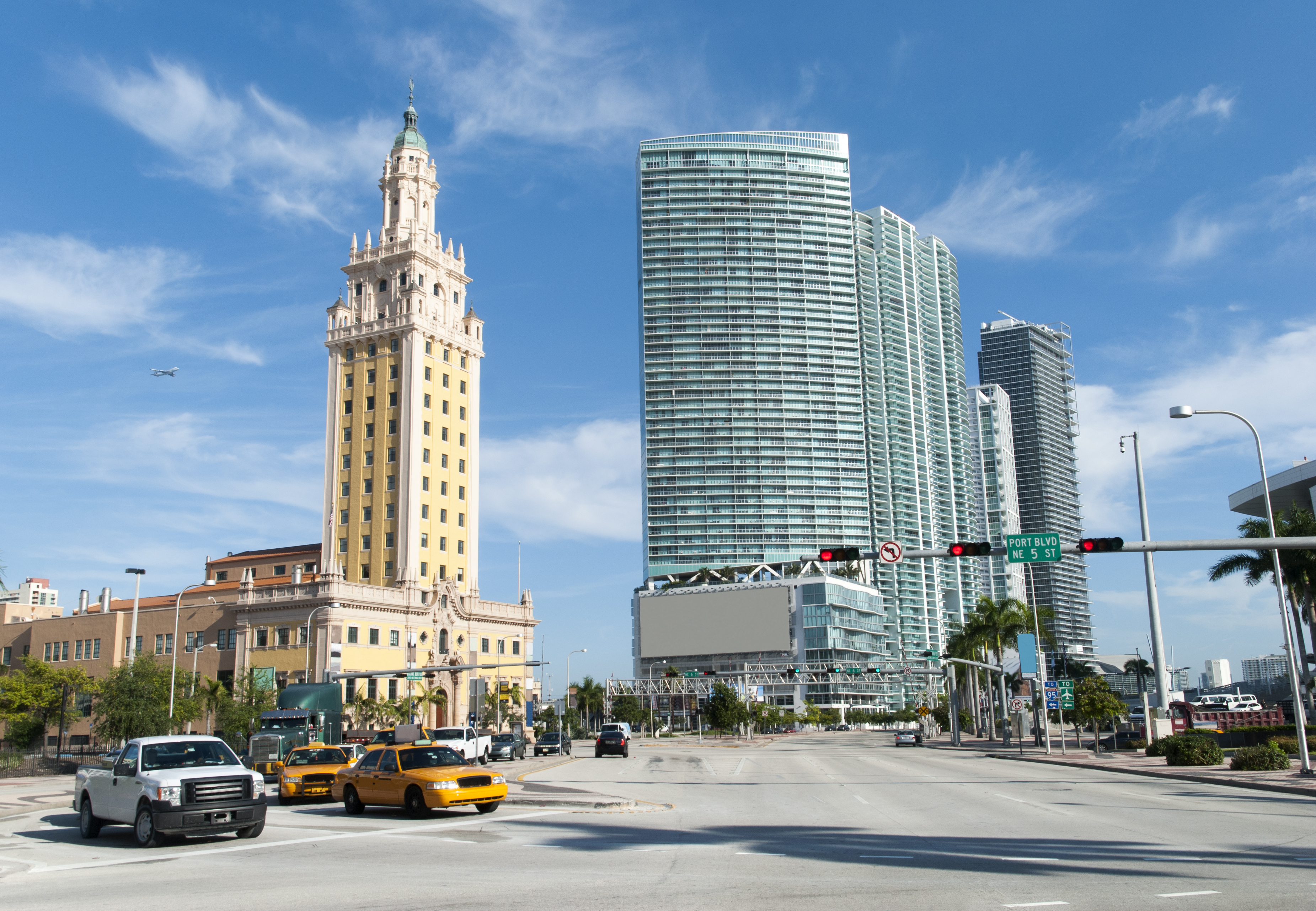
Miami is not just a city on the Florida map. It is a junction of business, leisure, restaurants, beaches, cinemas, and new developments. Here, the business savvy of North America meets the passion of Latin America, where real estate in financial districts stands alongside palm groves, and the sound of Atlantic waves touches Miami's villas. A resort city of business class. The city of Miami is always full of new ideas, developments, business plans, and real estate. It is the most popular American city in films. Everyone knows about the city of Miami, though Miami is not quite the correct spelling.
Million-dollar contracts are signed in Miami every day, and the city was founded by entrepreneurs. Before 1896, Miami did not exist.
About the city in numbers and facts
Status: City in the state of Florida, USA.
Geography: Located in the southeast of Florida, on the coast of Biscayne Bay (Atlantic Ocean). A significant part of the city is barrier islands, the most famous of which is Miami Beach.
Area: 143.1 km². A compact but extremely dense metropolis.
Population: About 436 thousand people (as of 2023). However, considering the agglomeration, it is one of the largest metropolises in the country.
Climate: Tropical monsoon. Summer is hot and humid, winter is short and very warm. A key factor is the Gulf Stream, flowing 24 km from the shore, which makes the climate mild all year round.
Foundation: Official city status since July 28, 1896. It got its name from the Miami River, named, in turn, after a Native American tribe.
Current facts and statistics about Miami
How was Miami created, how did this business city emerge, and what do entrepreneurs have to do with it? Miami officially became a city in 1896 thanks to the efforts of entrepreneur Julia Tuttle, who convinced a railroad magnate to extend the railroad and build a hotel. Miami is one of the few major U.S. cities founded by an entrepreneur and a magnate, a millionaire a century ago.
His name was Henry Flagler (Henry M. Flagler).
He was a railroad magnate and co-founder of Standard Oil, as well as the main investor in the development of the southern part of Florida. It was Flagler who agreed to extend the railroad to the future Miami at Julia Tuttle's request.
Just one wish, an interesting decision, and a bit of entrepreneur boldness. And Miami appeared, a city where palm trees grow, and million-dollar real estate contracts are signed. This is the main fact about Miami.
-
Population and Growth
Fact — Miami continues to grow steadily due to migration and the region's appeal to foreigners. Here, one can buy property and rent it out.
-
As of July 1, 2024, the estimated population of the city of Miami is 487,014 people.
-
The metro-peripheral zone (Miami-Fort Lauderdale-West Palm Beach) is estimated to reach approximately 6.372 million people in 2025.
-
Immigration plays a significant role: 54.3% of the population in Miami-Dade County is of foreign origin.
-
-
Age and Demographics
Fact — Miami remains a young and multicultural city with a predominant Latin American population. Young and active residents are predominant. New homes are being built, and yachts are being purchased.
-
The median age of Miami residents is about 39.7 years.
-
Ethnic composition: 71.2% Latino, about 12.7% black, 12.3% white.
-
-
Income and Inequality
Fact — Incomes are rising, but the gap between the rich and the poor remains one of the most significant in the USA.
-
The median household income in Miami is ~ $68,635 (2023).
-
The median family salary in Miami-Dade County is about $81,000, which is below the US average.
-
The top 5% of households earn more than $559,000, the bottom 20% — about $15,000.
-
-
Miami's Economy and GDP
Fact — Miami is one of the strongest economic centers in the Southeastern USA with a favorable tax system.
-
Miami's GDP is $219 billion.
-
The personal income tax is 0%.
-
The corporate tax is 5.5%.
-
-
Tourism in Miami
Fact — Tourism remains a key sector of the economy, generating billions of dollars in revenue annually.
-
In 2024, Miami-Dade hosted over 28 million tourists.
-
Tourists spent about $22 billion.
-
More than 8 million cruise passengers passed through the Port of Miami.
-
-
Labor Market and Salaries
Fact — The labor market is actively developing, especially for young professionals and those starting a career.
-
Entry-level salary growth in the Miami metro area is 5.2% annually (2020–2025).
-
Miami remains an attractive job market for budding professionals.
-
-
Social Challenges
Fact — Despite economic growth, social stratification and poverty levels remain high.
-
About 14% of residents live below the poverty line.
-
There is a sharp income disparity between the wealthy and the poor.
-
-
Development and Investments
Fact — The city is actively transforming into a global innovation center but faces infrastructural challenges.
-
Miami is becoming an international business hub, concentrating Latin American companies.
-
The city is investing in billion-dollar aerospace projects based on a former military base.
-
Issues: rising cost of living, housing, transportation.
-
-
Major Banks and Financial Institutions in Miami
Fact — Miami is considered the financial capital of Latin America, hosting large banks and international offices.
-
Amerant Bank — assets ~$10.4 billion.
-
Ocean Bank — assets ~$6.4 billion.
-
JPMorgan Chase, Bank of America, Wells Fargo — significant presence in the region.
-
-
Education in Miami and its Founders
Fact — Education is developing in parallel with the growth of the city, which was founded by entrepreneurs.
-
University of Miami — ~19,593 students.
-
Miami Dade College — one of the largest colleges in the USA.
-
FIU — a large public university.
-
Barry University — a private Catholic university.
-
Miami as a city was founded by entrepreneurs, including Julia Tuttle.
-
Historical Context: From the Idea of Miami to a Global Brand
The history of Miami is a story of rapid ascent.
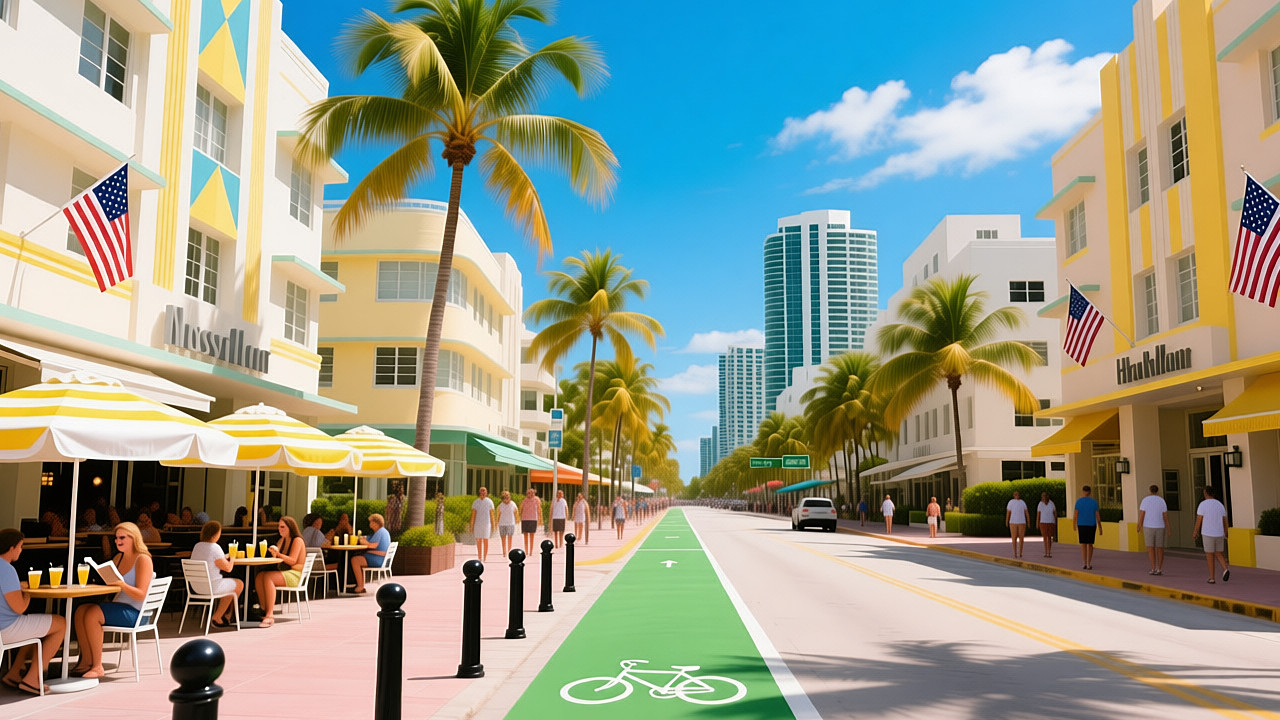
1. Resort Boom of the 1920s: In the era of jazz and art deco, Miami became a mecca for tourists. It was then that its architectural DNA was formed, especially in the South Beach area, which still holds the world's largest collection of art deco buildings.
2. Military Strategy: During World War II, the city became an essential hub for the US naval forces, providing a significant boost to infrastructure development and cementing its strategic significance.
3. Latin Accent: The second half of the 20th century was marked by mass immigration from Latin American and Caribbean countries, forever changing the cultural and business landscape of the city, turning it into the "capital of Latin America."
Economy: The Three Pillars of Prosperity
Miami's economy rests on three fundamental pillars:
1. International Trade and Logistics. The geographical location determined the city's destiny as the main gateway between North and South America. Port Miami and the international airport are key nodes of global logistics.
2. Finance. The city is a major financial hub, home to numerous banks, investment companies, and funds specializing in international operations and working with Latin American markets.
3. Tourism. This is the locomotive industry. Millions of tourists visit annually for the beaches, nightlife, shopping, and unique atmosphere.
Attractions: What to see beyond the beach?
Miami is deeper than the ocean's surface. Here are the top places to dive into its culture:
Villa Vizcaya: An architectural-landscape complex in the style of the Italian Renaissance. It is the luxurious estate of industrialist James Deering, with gardens on the bay — a testament to Miami's golden age.
Coral Castle: A mystery with no answer. A complex of megalithic structures, built single-handedly by Latvian immigrant Edward Leedskalnin from coral limestone. The technique of its construction remains unsolved.
Museum Quarter and beyond: For art lovers — the Lowe Art Museum, the interactive Museum of Science, the historical Museum of Southern Florida, and the avant-garde Museum of Contemporary Art.
Miami is a city of paradoxes. It is simultaneously relaxed and dynamic, American and Latin American, historical and eternally young. It is a business launchpad and a resort for dreamers. Understanding these paradoxes is key to understanding the phenomenon called "Miami."
The city of Miami is not just a point on Florida's map, but a true magnet for the elite, investors, and those who think globally. Here, the sun, ocean, and luxury merge into a single brand of success, where each investment is a step to a new level. The city is a mosaic of unique neighborhoods, each with its own vibe and opportunities. Based on the latest market data from September 2025, I've broken everything down: from top neighborhoods to types of real estate, with real cases and advice.
Miami Neighborhoods: Choose Your Lifestyle Systematically
The right neighborhood is about ~70% of investment success. In 2025, the market is stable: the median price of single-family homes in Miami-Dade County is about $595,000, but the ultra-luxury segment ($1M+) offers record square footage and premium prices. The overall sold-to-list ratio remains around 98%, indicating balance, but in premium areas, the supply remains limited. Here are the key neighborhoods with a breakdown of advantages, audience, and numbers for 2025.
Main Premium / Popular Neighborhoods
- South Beach
The epicenter of glamor and energy. Ocean Drive, white sandy beaches, art-deco architecture, top restaurants, and boutiques. Median condo price is about $650,000, rent from $3,500/month. Ideal for those who love being in the center of events. Audience: young professionals, artists, socialites. Drawback: noise and crowds, but safety is top-notch thanks to patrols. - Brickell
"The Manhattan of the South"—a financial hub with skyscrapers and bay views. Michelin-starred restaurants, boutiques, Metromover, developed infrastructure. Median condo price is about $750,000, in ultra-luxury condos + homes up to $10M+. Audience: bankers, top managers, investors. Plus: top-level service, EV charging stations, co-workspaces. Drawback: traffic, especially during rush hours. To see how this part of the city could fit your daily routine, explore the guide to living in Brickell. - Downtown Miami
Cultural and historical center: museums like PAMM, opera, concert halls, new towers with water views. Prices slightly lower than in Brickell but with a potential growth of 5-7% annually. Median condo prices are expected to be about $600,000. Audience: families, art lovers, growth investors. Proximity to the port and water routes is a plus. For a comparison of urban living and housing options, see the Downtown Miami neighborhood guide. - Edgewater
Waterfront area, views of Biscayne and the port, new towers with modern amenities. Median condo price is about $550,000, rent from $2,800/month. Audience: young families and professionals seeking a balance between tranquility and urbanism. Drawback: potential flood risks, especially in low-lying areas. - Coconut Grove
Bohemian oasis with greenery, yacht clubs, more relaxed lifestyle. Villas, boutiques, historical atmosphere. Median home price is about $1,200,000, condos about ~$700,000. Audience: families, creatives, those seeking nature and privacy. - Coral Gables
Prestige, European charm, strict zoning, excellent schools. Median home price is about $1,500,000 and up. Audience: families, diplomats, CEOs, those who value tranquility and aesthetic construction. - Sunny Isles Beach
Luxurious coastal area known for its oceanfront towers, European shops and restaurants. Audience: international families, those who want to live by the beach but in a more serene setting than South Beach. Condo prices are approximately $800,000+, homes/villas — $2M+ depending on location and view.
- Key Biscayne (Key Biscayne)
An exclusive island neighborhood often considered one of the priciest. The median price of homes in Key Biscayne is around $1,350,000-$1,420,000 (depending on sources) for different types of housing. (Redfin)
Rent here is very high, the atmosphere is private, with excellent beaches, yacht clubs, and greenery. Audience: wealthy family buyers, those who desire seclusion, high service level, privacy. - Miami Beach (other areas besides South Beach — Mid Beach, North Beach, etc.)
Quieter parts of the island. Mid and North Beach offer more space, often better views, a calmer pace, and more greenery than South Beach. Condo and home prices here are slightly lower than South Beach in premium sectors but still very high. For example, for all of Miami Beach, the median price of luxury condos is noticeably higher, and the price per sq. ft. in the luxury segment is rising. (CondoBlackBook) If living near the ocean matters to you, compare Miami Beach neighborhoods and their differences before choosing a property. - Wynwood
Center of contemporary art, galleries, street art, cafes, clubs. Very popular among the creative audience, startup founders, directors, artists. Condo prices here are somewhat lower than in premium areas: approximately average/slightly above average segment, especially for new or trendy buildings. - Design District (Miami Design District)
Boutique shopping, luxury brands, art galleries, fine dining restaurants. Buyers, investors, connoisseurs of design and style. Luxury prices: a good premium for brand, quality, view. - Midtown Miami
Between Wynwood and Design District. New condo projects, mixed-use: housing + retail + cafe. Attractive for young professionals, digital nomads, those who want to be in the center but not in the club area. - Little Havana
Cultural and historical part of the city, Cuban and Latin American atmosphere. More affordable prices, often characteristic homes, small buildings, denser development. Highly dependent on renovation/location. Audience: those who value authenticity, classic culture, lower and middle budgets + investors in renovations. - Little Haiti
An up-and-coming area, creative community, interesting old buildings, new projects. Lower prices, high potential for capital growth, especially if infrastructure improves. - Upper East Side / MiMo District
Mid-century historic homes, architecture, old-school atmosphere, stylish cafes, cozier neighborhoods. Prices are mid-premium, good for those who want style, don't want skyscrapers, noisy streets.
Market overview by property type and numbers
Here's some updated market data from various sources to support the descriptions:
- The median price of homes (single-family) in Miami-Dade County: ~$595,000.
- The median condo price across Miami-Dade: in some reports around $375,000 (a decline) for the entire condo market in the average segment.
- Key Biscayne: homes/all types of housing – the median price around $1,350,000 for all types, Asking Price around $1,420,000.
- Miami Beach – luxury condos: the price per sq. ft. has increased, the condo segment $1M-$3M remains active.
Property types: Strengths and how to choose (considering areas)
The Miami market is a paradise for the discerning: from condos to penthouses. Here's how type and area together form a picture.
|
Property Type |
Comfort / Service |
When to Choose / For Whom |
Example Areas |
|
Condo in Towers |
Security, pools, spa, restaurants, view, full amenity package |
For busy professionals, rental investors, those who don't want home maintenance |
Brickell, South Beach, Edgewater, Miami Beach luxury segment |
|
Townhouses |
More space, often garage, slightly more privacy |
Families seeking a compromise between a house and condo |
Coconut Grove, Coral Gables, Key Biscayne |
|
Single-Family Homes |
Full freedom, plot, park, pool |
For families valuing privacy, security, very high comfort |
Coral Gables, Key Biscayne, Coconut Grove |
|
Penthouses |
Top floors, views, terraces, private elevators, maximum luxury |
For those seeking status, view, exclusivity |
Top condos in South Beach, Brickell, Miami Beach, Key Biscayne |
Real Cases: Living and Investing in 2025
Case 1: An IT entrepreneur from Silicon Valley bought a condo in Brickell Flatiron for $1.2M. Bay view, coworking on the floor, Metromover to the airport — everything for business. He rents out in the off-season, ROI ~6%.
Case 2: A European family with children purchased a home in Coral Gables for $2.5M. Top schools, large plot, pool, green streets. Weekends in Coconut Grove, yacht, tranquility.
Case 3: An investor chose a penthouse in Sunny Isles for $7M. Community, beach, European restaurants. Rents for $20,000/month + price growth in the ultra-luxury segment.
Case 4: A family chose Key Biscayne — a home around $1.4-1.5M. Privacy, beach, green areas, yacht docks, safety. Less noise, more space, but more expensive.
Comparison Table: Areas + Prices + Audience + Pros/Cons
|
Area |
Median Price / Segment |
Audience |
Pros |
Cons |
|
South Beach |
~ $650,000 condo |
Artists, partygoers, young professionals |
Beach, nightlife, style, high presence |
Noise, crowds, higher maintenance costs, traffic |
|
Brickell |
$750,000+ condo / ultra-luxury |
Financiers, investors, professionals |
Service, view, location, infrastructure |
Density, parking, traffic |
|
Downtown Miami |
~$600,000 condo segment |
Families, investors, culture |
Development, views, convenience |
Noise, typically fewer green spaces, view depends on the floor |
|
Edgewater |
~$550,000 condo |
Young families, professionals |
Bay view, new buildings, amenities |
Potential flood issues, traffic noise |
|
Coconut Grove |
Houses ~$1.2M, condos ~$700,000 |
Families, creatives, botanists |
Greenery, schools, yachts, privacy |
Prices, sometimes distance from the center |
|
Coral Gables |
Houses ~$1.5M+ |
Families, elite, people valuing status |
Architecture, schools, prestige |
High taxes, maintenance cost, fewer condos available |
|
Sunny Isles Beach |
Condos ~$800,000+, houses $2M+ |
International families, beach enthusiasts |
Beach, service, prestige |
Can be remote, less dynamic |
|
Key Biscayne |
Houses/all types ~ $1.35-1.42M |
Those seeking privacy, elite |
Island, beach, safety, greenery |
Price, transportation access, distance from the center |
|
Miami Beach (Mid / North) |
Luxury/upper mid-segment condos |
Families, those seeking beach + tranquility |
Beach, views, a calmer pace than South Beach |
Some areas need renovation, transportation |
|
Wynwood |
Mid-high condos / new projects |
Creatives, startupers, youth |
Art, cafes, atmosphere, youthful energy |
Night activity, noise, fewer green areas, sometimes narrow roads |
|
Design District |
Luxury condos / brands / galleries |
Collectors, fashion lovers, investors |
Boutiques, style, high brand reputation |
Cost, prestige above quality and view demands |
|
Midtown Miami |
Mid-high condos / mixed-use projects |
Professionals, digital nomads, young families |
Convenience, new housing+service format, close to the center |
Can be densely built, potential for traffic jams |
|
Little Havana |
Mid segment, houses + small buildings |
People valuing culture, budgets below premium |
Authenticity, growth potential, more affordable |
Infrastructure can be weaker, older housing |
|
Little Haiti |
Mid / slightly below average |
Creative people, investors, those wanting to "experience" Miami |
Liveliness, new projects, culture |
Some parts still in development, repairs, infrastructure |
|
Upper East Side / MiMo District |
Mid-premium |
People valuing architecture, style, tranquility |
Atmosphere, style, old-style home options |
Sometimes distance from the center, fewer luxury building amenities |
Practical tips: How to buy without mistakes
- Budget Expenses: Besides the cost of housing itself, consider property tax (1-2%), HOA/maintenance fees, hurricane/flood insurance, utility costs.
- Mortgage/Payment: Non-residents usually provide ≥20-30% down payment. Interest rates are a key factor, especially for large amounts.
- Lawyer/Agency/Inspection: A realtor who knows the specific area well is a golden key. Home or condo inspection is crucial — everything: foundation, mold, ventilation system, roof. Especially in older buildings.
- Natural Risks: Miami is prone to hurricanes, floods, and rising water level issues. When purchasing on the front line or lower floors, check the flood zone, elevation, insurance, and construction fortification.
The city of Miami awaits — act strategically
Miami is a city where status and comfort merge into a perfect environment. Approach it with a cool head: choose an area based on your goals, property type to match your lifestyle, evaluate long-term potential — and the investment will pay off handsomely.
Miami is not just a city. It's a state of mind, where palm trees sway to the rhythm of reggaeton, and the ocean whispers: "Relax, you're already here." If you think Miami is just beaches and parties, get ready to be surprised. This city is a cocktail of cultures, tastes, and opportunities that you want to savor slowly, relishing every sip. If you are considering living here, compare neighborhood information and homes in Miami.
Why Miami?
1. Sunshine 365 days a year
Miami doesn't know what gloomy days are. Here +25 °C is almost a law of nature. The beaches of South Beach and Coral Gables entice with white sand and turquoise water. Forget about an umbrella — you only need it for a cocktail.
2. Cultural Mixer
Miami is where Latin America meets the USA, and the Caribbean adds spice. In Little Havana, you can smell Cuban coffee and cigars, while in Wynwood, walls scream with bright graffiti. Here they speak English, Spanish, and sign language if you're on the dance floor.
3. Food as Art
Forget the diet. Miami serves ceviche that will make you cry with joy and Cuban sandwiches crunchy as dreams of weekends. Want seafood? The Bayside Market will offer you a crab that was just waving its claw. And for those with a sweet tooth — guava desserts that make your head spin.
4. Business with an Ocean View
Miami isn't just about leisure. It's a hub for startups, technology, and finance. Offices open here with views of yachts from the window, and you can catch a wave during lunch break. The city attracts entrepreneurs who want to work where others dream of vacationing.
What to do in Miami?
You can do sports, visit cinemas, restaurants, or cafes in the city.
- South Beach: Sunbathe, dance, photograph. Here life is like an MTV music video.
- Wynwood: Immerse yourself in the world of street art and sip craft beer in an open-air gallery.
- Everglades: Ride an airboat and meet alligators (from a distance, of course).
- Little Havana: Drink mojito and learn to dance salsa, even if you have two left feet.
Why does Miami captivate?
Miami is a city that doesn't pretend. It's bright, noisy, a bit chaotic, but always genuine. Here everyone finds their own: romantic sunsets, the drive of nightclubs, or the silence of mangroves. It's a place where you want to live, not just visit.
If you haven't been to Miami yet, add it to your list. If you have been — you already know why you feel drawn back.
FAQ: Frequently Asked Questions
- "Can a foreigner buy property in Miami?" — Yes, US law does not restrict foreigners' rights to buy property.
- "Does buying property grant residency?" — No, to move, you need an appropriate visa (L-1, EB-5, etc.).
- "What are the risks when buying?" — Main risks: natural factors (hurricanes), underestimating maintenance costs, choosing an unsuitable area.
- "How to manage property remotely?" — Through property management services: maintenance, rental, utility payments.
Need help choosing?
Our team of Miami luxury real estate experts will help select a property that matches your status and investment goals.
Similar articles