Miami Pre-Construction Condos: 2026 Off-Plan Buyer Guide
A reservation is not a contract, deposits above 10% may fund construction, and a marketing date is not a delivery promise. See how Florida's 15-day cancellation right, escrow rules, permits and financing really shape an off-plan Miami purchase.

16.10.2026

21 minutes

November 12, 2026
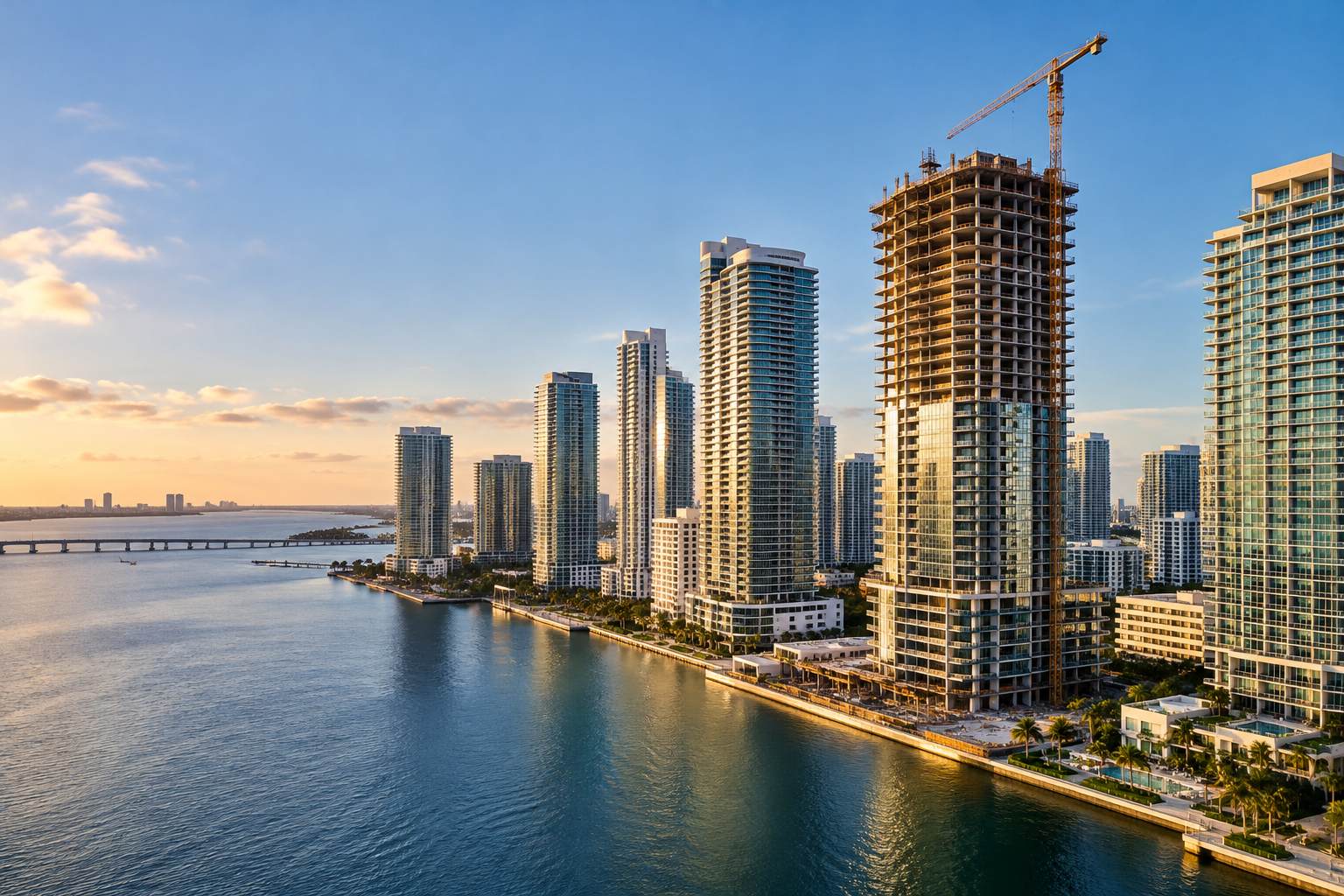
Start With the Contract, Not the Rendering
Buying Miami pre-construction condos means contracting with a developer for a unit that is not finished yet. Your rights come from Florida's Condominium Act, the offering documents and your signed agreement. A reservation differs from a purchase contract, deposits may fund construction, and a marketing date does not guarantee delivery.
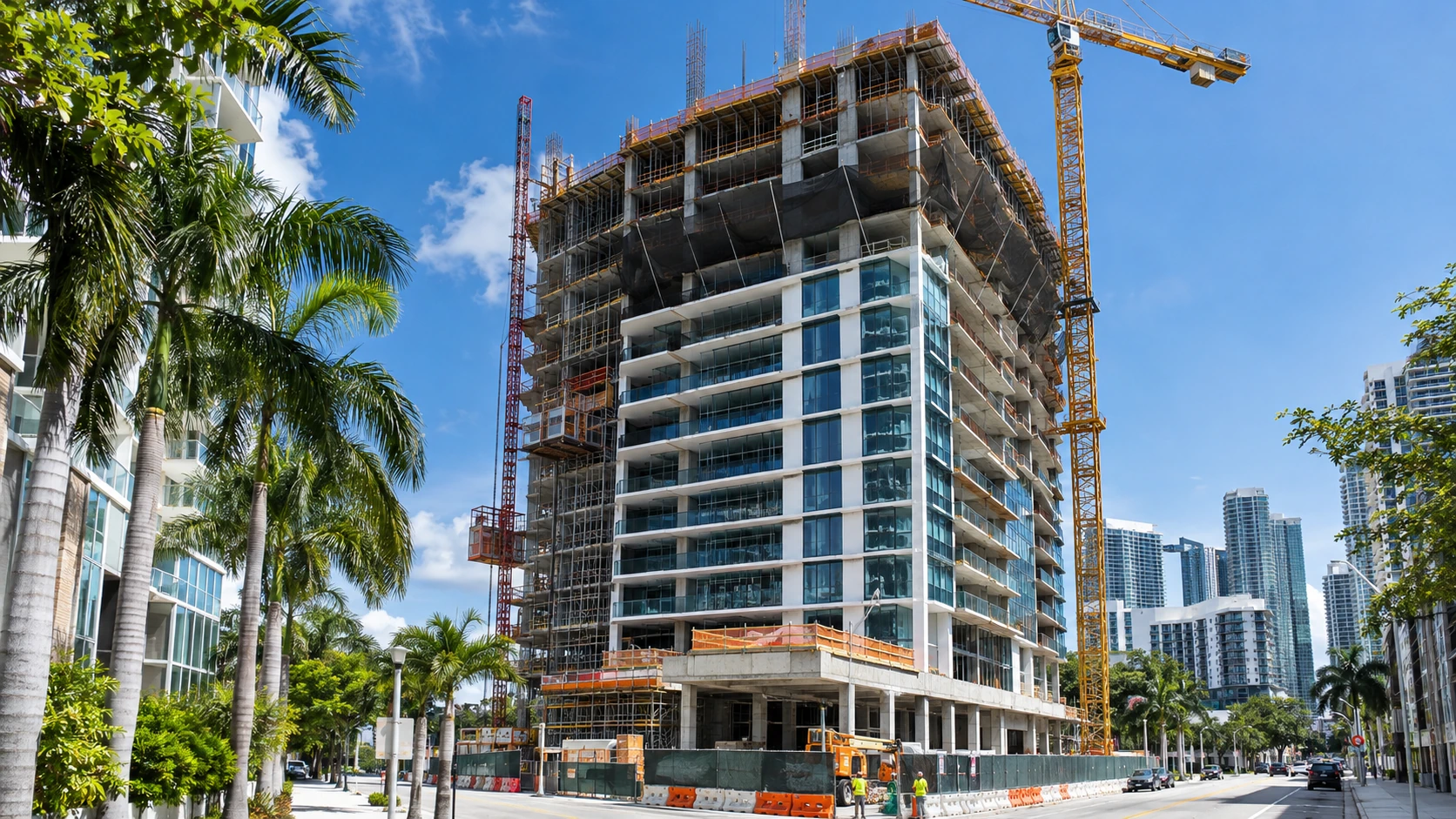
At BonaDomus, we approach the purchase by separating documented commitments from assumptions. The questions that matter include when another deposit becomes due, what happens if completion slips and whether you can obtain financing at closing. This guide follows the purchase from reservation through ownership and includes a 16-step due-diligence checklist.
This guide explains the 2026 framework for educational purposes. It is not legal, tax, financing, insurance or investment advice. Project documents and applicable requirements must be checked again for your transaction.
What Does Buying Off-Plan Actually Mean?
"Pre-construction," "preconstruction" and "off-plan" are marketing terms, not separate legal forms of ownership. You typically contract with a condominium developer for a residential unit that is proposed, under development or not yet substantially complete.
A sales launch, state filing and building permit establish different things. Construction completion, authorization to occupy and closing are also separate milestones. We compare projects by their documented stage rather than treating every advertised development as equally ready to deliver.
When comparing Miami condos, identify whether each option is an unfinished developer offering or a completed unit. That distinction changes what you can inspect today and which contract protections you need.
Resale statistics do not describe the entire off-plan market. The August 2026 market report from MIAMI REALTORS + RWorld states that standard resale MLS totals largely exclude new-construction, pre-construction and condo-conversion sales. For new developments, compare current developer availability and price sheets rather than treating resale inventory as a complete measure.
A Reservation and a Purchase Contract Create Different Obligations
A reservation records preliminary purchase interest under its stated terms. An enforceable purchase agreement creates contractual obligations. Under Florida's reservation framework, the deposit remains refundable before it becomes subject to a purchase agreement.

Under §718.502 filing requirements, a developer may accept reservations before offering an enforceable contract only through the required filed reservation and escrow arrangement. The developer must also have an ownership, leasehold or contractual interest in the land.
Section 718.202(6) requires payment of the reservation deposit to the escrow agent. Either the prospective purchaser or the developer may request its refund in writing, and the agent must refund it immediately and without qualification. Ask for a receipt and retain the signed reservation agreement.
Once a purchase agreement is executed, the deposit becomes subject to purchase-contract escrow rules. Do not assume that the reservation-stage refund right continues after signing, or that a sales team's use of the word "reservation" establishes the payment's legal status.
Verify the Developer and State Filing Before Paying
A residential condominium developer must file the required documents with Florida's Division of Florida Condominiums, Timeshares, and Mobile Homes before offering an enforceable purchase contract, subject to statutory procedures. Check the project record independently rather than relying only on a sales-center statement.
Use the DBPR project search to search by project or developer name, location or identifying number. Match the legal developer entity and project address to the documents you receive. A marketing brand may differ from the entity selling the unit.
The DBPR portal glossary explains the Condominium Project license type and status fields. Review available complaint and final-agency-action information without treating an allegation as a finding.
Projects with more than 20 residential units generally require a prospectus or offering circular. The requirement also covers qualifying grouped developments sharing common property serving more than 20 residential units. The document must be filed and furnished to buyers as required before an enforceable contract.
Our recommendation is to perform the DBPR check before placing a reservation deposit. A filing confirms a regulatory step, not construction progress or a guarantee of developer performance.
How the 15-Day Developer-Contract Cancellation Period Works
Under §718.503 disclosure rules, a buyer may cancel a developer contract by written notice within 15 days after both signing and receiving all required developer documents. This statutory voidability right ends at closing. A purported waiver cannot remove it.
The period is tied to developer disclosures. It is not a general home-inspection period or a universal cancellation right for resale purchases. If you sign before receiving the complete required package, signing alone does not start the full statutory clock.
Keep dated delivery records and have your attorney calculate the deadline. Before it expires, obtain review of the contract's default and cancellation provisions, together with the financing and completion obligations. Follow the applicable notice requirements rather than relying on a phone call to the sales office.
What Happens When the Developer Changes the Offering?
A developer amendment that materially alters the offering adversely to the buyer creates a new 15-day voidability period after receipt. That right also terminates at closing.
Not every change qualifies. Section 718.504 excludes certain budget increases beyond the developer's control from material-adverse-change treatment when statutory conditions are met. Send amendments promptly to your Florida real-estate attorney instead of deciding from the amendment's title whether cancellation is available.
Read the Prospectus for Rights, Costs and Delivery Terms
The prospectus, also called an offering circular, explains the condominium offering and includes key governing documents. Read it alongside the purchase agreement to establish what the developer promises, what you must pay and which restrictions will govern ownership.

Under §718.504 prospectus requirements, qualifying offerings must disclose the estimated latest completion date or identify the contract provision containing it. The package must also address facilities and timing, estimated buyer closing expenses, the developer's identity and its principals' experience.
Depending on the offering, review these documents and exhibits:
- The declaration or proposed declaration, association articles and bylaws.
- The estimated operating budget and unit-expense schedule.
- Floor plans, plot plans and use restrictions.
- Management, maintenance, recreation and shared-facility agreements.
- The form purchase agreement and escrow agreement.
Management and shared-facility agreements deserve particular attention. They can create continuing charges or obligations that are less obvious than the advertised monthly association fee.
Why Sales-Center Statements Need Written Support
Florida's developer-contract framework expressly warns that oral representations cannot be relied upon as correctly stating the developer's representations. Ask where each material promise appears in the contract or filed documents.
- Unit specifications: floor plan, finishes, ceiling heights and appliances.
- Exclusive-use features: parking, storage, private elevators, rooftop rights and dock or marina rights.
- Use and surroundings: rental permissions and any promised view protections.
- Services and delivery: amenities, furniture packages, branded services and completion commitments.
A rendering of an open view does not establish a protected view corridor. Written specifications also need to be read with any substitution or modification clauses.
Marketing remains legally relevant. Under §718.506 advertising remedies, buyers may have remedies involving reliance on materially false or misleading developer promotional information. Preserve the materials rather than assuming they are either contractual guarantees or legally meaningless.
How Miami Condo Deposits Move Through Escrow
Under §718.202 deposit rules, purchase payments up to 10% of the price generally must enter escrow, subject to qualifying statutory alternatives or assurances. Payments above 10% received before completion must enter special escrow. The developer may be permitted to withdraw qualifying excess funds for construction.

Confirm the escrow agent identified in the contract and retain payment receipts. Track each deposit's amount and trigger separately from the question of whether the developer may use it.
| Payment category | Treatment | Buyer check |
|---|---|---|
| Reservation deposit | Held by the escrow agent under reservation rules before a purchase agreement. | Written refund procedure and transition to contract status. |
| Purchase payments up to 10% | Subject to statutory escrow or qualifying assurance requirements. | Escrow terms and any accepted alternative assurance. |
| Purchase payments above 10% | Special escrow, with possible authorized construction use. | Construction-use authorization and required warning. |
When Can the Developer Use Your Deposit?
Funds above 10% may be used for qualifying construction and development costs only when the statutory conditions are satisfied:
- Construction has begun.
- The contract expressly permits the use and contains the required conspicuous warning.
- The withdrawal pays actual qualifying construction or development costs.
Permitted and excluded uses are materially different:
| Qualifying uses | Excluded uses |
|---|---|
| Demolition and site clearing. | Sales commissions, salesperson salaries and expenses. |
| Permit, impact and utility reservation fees. | Advertising and marketing. |
| Architecture, engineering and surveying directly related to the condominium property. | Specified loan costs, attorney and accounting fees, and insurance costs. |
The practical consequence is that all deposit money may not remain untouched until closing. Have your attorney explain the construction-use provision before you commit funds.
Why There Is No Universal Miami Deposit Schedule
Florida law does not establish a universal "10%-20%-30%" payment schedule. Each contract sets its own installments and payment triggers. We recommend comparing the actual schedules rather than substituting a supposedly typical Miami schedule.
A payment due on a fixed calendar date creates a different cash obligation from one triggered by a construction milestone. Record how the developer establishes that a milestone occurred and how much notice you receive.
If you properly terminate under the contract or Condominium Act, escrowed funds are returned under the applicable rules. Buyer default may instead permit release to the developer under contractual remedies. Neither universal refundability nor automatic forfeiture is a safe assumption.
Read Completion Dates Together With Every Extension Clause
An estimated latest completion date is not necessarily a hard contractual outside date. An outside date is a contractual deadline whose consequences depend on the agreement. Extension rights can change when remedies become available.
Locate the completion provision referenced in the prospectus, then review:
- Force majeure provisions covering specified events outside the developer's control.
- Government-delay, material-shortage and other construction-delay clauses.
- Notice requirements and how extensions are calculated.
- Buyer remedies if the applicable completion deadline is missed.
For a relocation, separately plan where you will live if delivery moves. We do not treat a launch-event timeline as a promise of occupancy.
Verify Project Progress Through the Correct Building Department
A sales launch, groundbreaking event or "topped out" announcement does not establish every required permit or authorization to occupy. Verify the parcel's jurisdiction and check official records for each claimed stage. A permit application is not an issued permit.

For City of Miami projects, the City's permit application tracking guidance directs you to iBuild and ProjectDox for application and plan-review status. Use its permit history search to check issuance, inspections and certificates.
For unincorporated Miami-Dade, consult County building permit records and Building Online Services. Projects in Miami Beach, Coral Gables, Aventura, Sunny Isles Beach or another municipality require checks with that municipality's building department.
From Announcement to Occupancy: What Proves Each Stage?
This status ladder identifies evidence to request. It is not a mandatory chronological sequence, and some steps overlap or occur in a different order.
| Stage | Evidence to request | Where to check |
|---|---|---|
| Announced or marketed | Current offering materials identifying the site and developer. | Developer materials, cross-checked against public records. |
| Reservation program | Reservation and escrow arrangements with required filing status. | Developer documents and DBPR records. |
| Condominium filing | Project record and filed offering documents. | DBPR. |
| Contract sales | Purchase agreement and required disclosure delivery. | Developer and buyer's attorney. |
| Land-use or plan approval | Applicable approval and its conditions. | Responsible planning or zoning authority. |
| Permit application | Application number and review status. | Building department portal. |
| Permit issued | Issued permit showing authorized work. | Building department records. |
| Construction started | Documented site work and relevant inspection activity. | Site verification and inspection records. |
| Topped out | Evidence of structural progress. | Construction reports and relevant inspection records. |
| Interior and building systems work | Progress and inspections for mechanical, electrical and plumbing work. | Building department records and project reports. |
| Substantial completion | Applicable completion certifications. | Developer's closing package and attorney review. |
| TCO or CO | Issued occupancy authorization, including conditions and scope. | Building department. |
| Declaration recording | Recorded declaration and related instruments. | County public records and title review. |
| Closings | Executed closing documents and recorded conveyances. | Closing agent and county public records. |
| Association turnover | Board-election and turnover records. | Association records and counsel. |
Legal Creation Does Not Establish Readiness to Occupy
Under §718.104 condominium creation, recording the declaration in county public records legally creates the condominium. Described units can exist legally before planned improvements are finished.
Conveyance of completed units follows the statute's substantial-completion and certification framework. Lawful occupancy separately depends on a certificate of occupancy, a temporary certificate of occupancy or equivalent authorization. Review any TCO conditions and expiration rather than treating it as identical to a final CO.
Expect Association Costs to Evolve After Initial Closings
You may close while the developer still controls the condominium association. Under §718.301 turnover rules, nondeveloper owners become entitled to elect at least one-third of the board when they own 15% or more of the units ultimately operated by the association. Majority control follows later statutory thresholds or events.
The initial budget is an estimate, not a permanent fee commitment. Review reserve funding and the contracts that drive future assessments:
- Management, maintenance and other service contracts.
- Bulk communications and television agreements.
- Branded-service obligations.
- Shared-facility and master-association charges.
When comparing South Florida condos, separate the advertised assessment from the full set of mandatory charges. Two buildings with similar monthly assessments can allocate costs differently.
If you also consider South Florida homes or South Florida townhouses, compare maintenance responsibility and ownership structure. A townhouse's physical form alone does not tell you whether it is a condominium or what an association maintains.
Reserves, SIRS and Future Building Inspections
Under §718.112 reserve requirements, associations must budget reserves under the applicable rules. Qualifying buildings with three or more habitable stories fall within the structural integrity reserve study framework. A SIRS evaluates specified building components and the funding needed for their future repair or replacement.
The developer must obtain the applicable turnover inspection report before transferring control in qualifying buildings. Ask how reserve obligations are reflected in the proposed budget and which reports will be delivered at turnover.
Under §553.899 milestone inspections, qualifying residential condominium buildings generally reach their initial inspection requirement at 30 years, with an earlier 25-year requirement possible under applicable local determinations. New construction typically has not reached that age at closing. Future owners still bear maintenance, reserve and inspection obligations.
Arrange Financing Around the Future Closing, Not Today's Pre-Approval
Mortgage pre-approval at signing does not guarantee financing years later. The lender must reassess the borrower and the condominium project near closing. Your contract may still require you to close if the loan is unavailable.

Have the lender review the transaction early and revisit the plan before major deposits. Check the financing contingency's scope and deadline, if one exists. Many developer contracts do not make the buyer's obligations conditional on obtaining a mortgage.
The later review can involve:
- Interest rates and your income, assets and credit.
- The unit's appraised value.
- Project completion and occupancy status.
- Presales, insurance and other project eligibility requirements.
Project Eligibility Is Separate From Borrower Approval
Fannie Mae's condo project standards distinguish new projects from established projects and assign project-review responsibilities to lenders. A financially qualified borrower can still face a project eligibility problem.
As an August 2026 conventional-loan example, Fannie Mae's new-project Full Review generally requires at least 50% of units in the relevant legal phases, together with prior phases, to be conveyed or under contract to principal-residence or second-home purchasers. The relevant project or phase generally must meet substantial-completion requirements. Individual units must be available for immediate occupancy at loan closing.
These are investor-program rules, not universal Florida law. Jumbo, portfolio and foreign-national loan programs can use different standards. Ask your lender which review applies and what remains unresolved.
Prepare for an Appraisal Below the Contract Price
If the lender's appraisal is below the contract price, the available loan may be smaller than expected. You may need additional cash unless the agreement provides an applicable financing or appraisal protection. Future appreciation should not be the funding plan for that gap.
Check Whether You Can Transfer the Contract Before Closing
There is no general buyer right to assign a pre-construction purchase agreement to another buyer. The contract may prohibit assignment or require developer consent. It may also restrict related-party transfers and pre-closing resale marketing.
Before relying on an assignment exit, have counsel identify the permitted timing, consent standard and any lawful transfer or administrative fees. An intention to "flip the contract" does not create a right to do so.
For a Miami condo investment, also confirm rental restrictions independently of assignment rights. Permission to transfer a contract does not establish permission to rent the completed unit, and neither creates guaranteed income.
Investors comparing South Florida multi-family properties should evaluate the different ownership and operating responsibilities. A rental building and a developer condo contract require different due-diligence questions.
Likewise, South Florida commercial real estate requires analysis of its permitted use and applicable transaction documents. Acquiring businesses for sale in South Florida adds operating-business diligence and may not include ownership of the premises. The residential developer-sale framework described here should not be assumed to govern either transaction.
Estimate the Full Cost of Owning the Completed Unit
Post-closing costs depend on future assessed value, parcel-specific risks and the building's actual obligations. The contract price and first-year association estimate do not capture the full cost of ownership. Update your estimates near completion.

Property Taxes May Reflect a Different Value
The Miami-Dade Property Appraiser's property tax estimator warns that a pre-construction price agreed months or years earlier may not reflect market value at the later January 1 assessment date. Do not assume your original contract price determines the future tax bill.
Use a realistic future market-value estimate and the completed property's taxing jurisdiction. Include known non-ad valorem assessments, which are charges not calculated from property value. The current land parcel's bill and the developer's estimate are not substitutes for this calculation.
Check Flood Exposure and Both Layers of Insurance
Use Miami-Dade's official flood zone maps for the exact parcel. Review effective and preliminary maps separately. The County states that federally backed mortgages in Special Flood Hazard Areas require flood insurance.
Ask an insurance professional to review:
- The parcel's flood designation and available finished-floor elevation information.
- The association's expected master coverage, exclusions and deductibles.
- The unit-owner HO-6 policy requirements for interior property and liability coverage.
- Any separate flood coverage required by the lender or needed for the unit.
A new building is not automatically free of flood or wind risk. Premiums and coverage needs are project-specific.
Separate Closing Charges From Recurring Expenses
Where required, the prospectus includes a schedule of estimated buyer closing expenses. Review it against the contract's allocation of costs and the closing agent's updated estimate.
- Closing expenses: title and closing arrangements, recording charges, developer charges and association contributions.
- Association obligations: regular assessments, master-association charges and reserve funding.
- Additional recurring costs: parking, storage, utilities, club or shared-facility charges and branded-service fees.
- Personal ownership costs: property taxes and applicable unit-owner insurance.
There is no universal Miami pre-construction closing-cost percentage. When comparing broader South Florida real estate, use an all-in ownership budget for each property rather than purchase price alone.
Document Defects and Closing Conditions Before Funding
Use the inspection rights your contract provides before closing. Arrange an independent inspection where permitted, document a punch list and complete the final walkthrough. Confirm occupancy authorization, declaration recording, title and contractual closing conditions before releasing funds.
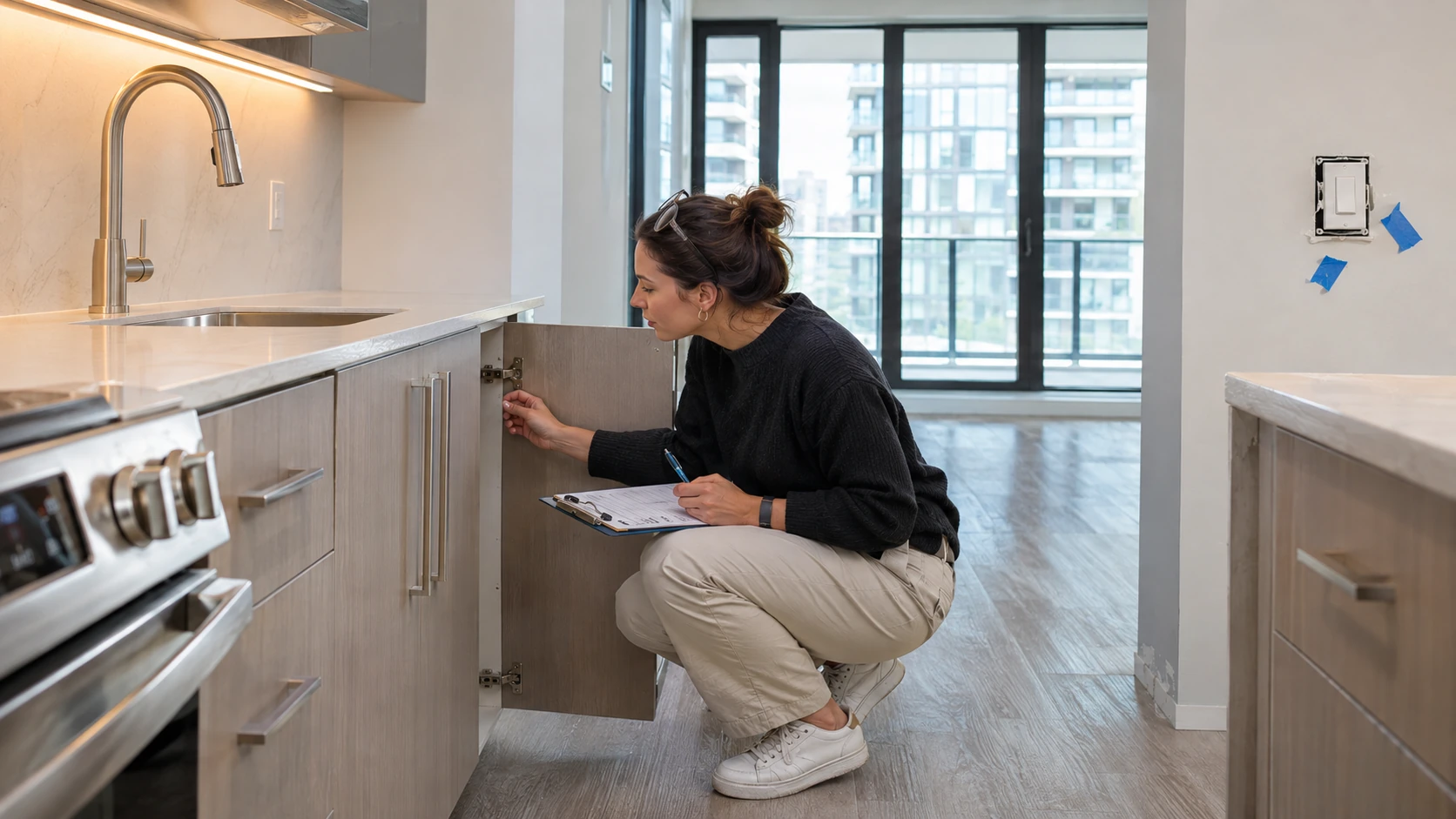
A punch list is a written record of incomplete or defective items. Seek written developer acknowledgment and clarify the repair process and timing. Do not assume that every unresolved item permits you to delay closing or withhold money.
Our recommendation is to keep inspection findings and the developer's responses in one written record. Raise unresolved legal issues with counsel before signing closing documents because statutory developer-sale voidability rights terminate at closing.
When Developer Warranty Periods Begin
Under §718.203 developer warranties, the statutory implied warranty on the unit runs for three years from completion of the building containing it. The clock therefore does not necessarily begin on your individual closing date.
Specified roof, structural and building-serving mechanical, electrical and plumbing warranties begin at completion. They continue for three years or one year after nondeveloper owners obtain association control, whichever is later, subject to a five-year maximum.
Other property and components can have different warranty periods and conditions. Review maintenance obligations and the applicable claim procedure with counsel. A warranty does not replace an inspection or guarantee that every later defect is covered.
16 Checks From Reservation Through Closing
Check the project independently at each stage and retain the supporting records. This workflow connects the legal review with financing and construction checks, so a sales update does not become your only evidence of progress.
- Verify the developer and project. Match DBPR records to the legal seller, address and offering documents.
- Verify the site. Check the developer's land interest and the applicable planning and permit records.
- Read the reservation agreement. Establish what is reserved and how the reservation ends before paying.
- Confirm the escrow agent. Verify payment instructions independently and request a deposit receipt.
- Calendar the statutory deadline. Track both buyer execution and delivery of all required documents for the 15-day period.
- Obtain attorney review. Have a Florida real-estate attorney review the purchase agreement, prospectus or applicable disclosures, and exhibits.
- Review completion obligations. Identify the estimated date, any outside date, extension rights and delay remedies.
- Map every deposit. Record amounts and triggers, including whether funds above 10% may be used for construction.
- Confirm features and use rights. Locate written support for the unit specifications, parking, storage, views, rental permissions and assignment rights.
- Review association obligations. Examine the budget, reserves and shared-facility or branded-service agreements.
- Test the financing plan. Confirm borrower and project requirements well before closing and revisit them before major payments.
- Monitor amendments. Preserve delivery dates and obtain prompt legal review of potentially adverse changes.
- Track construction independently. Check permits and inspections through the responsible city or County authority.
- Refresh ownership estimates. Obtain updated property-tax, flood and insurance estimates near completion.
- Inspect and document. Use permitted inspections, secure a written punch list and review warranty terms.
- Verify closing readiness. Confirm the CO or TCO, declaration recording, title and all applicable closing conditions.
Compare active Miami pre-construction projects and contact BonaDomus for project-specific buying guidance. Have a qualified Florida real-estate attorney, lender, tax professional and insurance professional review the issues within their respective fields.
Commit Only When the Obligations Fit Your Plan
A sound off-plan purchase rests on the written offering, the signed contract and independently verified project status. A refundable reservation does not preserve the same exit rights after signing, and special escrow does not mean every dollar remains untouched. Financing and ownership costs must be reassessed as closing approaches.
Before committing, make sure your cash plan can meet the actual deposit schedule and your housing plan can accommodate the contract's delay provisions. If the purchase depends on assignment, a particular loan or a promised feature, establish that protection in the documents before the relevant cancellation right expires.
Is a reservation deposit on a Miami pre-construction condo refundable?
Under Florida Statutes §718.202(6), a reservation deposit must be paid to the escrow agent, and either the prospective buyer or the developer can request a refund. The escrow agent must then return it immediately and without qualification. This right applies only to a reservation made under a properly filed reservation and escrow arrangement. Once you sign the purchase agreement, the deposit falls under the purchase-contract escrow rules and the reservation refund right no longer applies.
How does the 15-day cancellation right work in a Florida developer condo contract?
Under §718.503, you can cancel a developer contract by written notice within 15 days after you have both signed it and received all the documents the developer is required to deliver. If the developer later issues an amendment that materially changes the offering to your disadvantage, a new 15-day period starts when you receive it. Both rights end at closing and cannot be waived. This is not a home-inspection period, and it does not apply to ordinary resale purchases.
Can a Miami developer spend my condo deposit before the building is finished?
Payments up to 10% of the purchase price generally stay in escrow or are covered by statutory assurances. Amounts above 10% go into a special escrow account, but the developer may withdraw them once construction has begun if the contract expressly allows this and carries the required conspicuous warning. These funds may pay only for actual construction and development costs, such as demolition, site clearing, permit and impact fees, architecture and engineering. They may not pay for sales commissions, marketing, attorney and accounting fees, insurance or specified loan costs.
Is there a standard deposit schedule for Miami pre-construction condos?
No. Florida law does not set a universal "10%-20%-30%" schedule, and each developer contract defines its own installments and payment triggers. Some payments fall due on fixed calendar dates, while others are triggered by construction milestones such as groundbreaking or topping out. Check how the developer proves that a milestone has occurred and how much notice you will get, then confirm that your cash plan covers every payment.
How can I check whether a Miami pre-construction project actually has permits?
First confirm which jurisdiction the parcel is in, because a sales launch or groundbreaking event does not prove that permits have been issued. For City of Miami projects, use iBuild and ProjectDox for application and plan-review status, and the City's permit history search for issued permits, inspections and certificates. For unincorporated Miami-Dade, use the County's permit records and Building Online Services. For Miami Beach, Coral Gables, Aventura, Sunny Isles Beach and other municipalities, check with that city's building department.
Why might I not get a mortgage at closing on a pre-construction condo?
Pre-approval at signing does not guarantee a loan years later, because the lender reassesses rates, your finances, the appraisal and the project itself near closing. For example, under Fannie Mae's August 2026 Full Review rules for new projects, at least 50% of units in the relevant legal phases generally must be conveyed or under contract to principal-residence or second-home buyers, and units must be ready for immediate occupancy at loan closing. Many developer contracts do not make your obligation to close conditional on financing, so you may need extra cash, for example if the appraisal comes in below the contract price.
How are property taxes calculated on a new Miami condo bought pre-construction?
The Miami-Dade Property Appraiser warns that a contract price agreed months or years earlier may not reflect the market value on the January 1 assessment date that follows completion. Neither the current land parcel's tax bill nor the developer's estimate is a reliable basis for the calculation. Use the official tax estimator with a realistic future market value, confirm the taxing jurisdiction of the completed property, and add any non-ad valorem assessments.
- — Before You Commit
- — Terms and Project Stages
- — Reservation Versus Purchase Contract
- — Developer and Filing Checks
- — The Offering Document Package
- — Deposits and Escrow Rules
- — Completion Dates and Extensions
- — Permits and Construction Evidence
- — Association Control and Costs
- — Financing and Appraisal Risks
- — Assignment and Exit Restrictions
- — Taxes and Ownership Costs
- — Inspection and Developer Warranties
- — Your Sixteen-Step Buyer Checklist
- — Making a Documented Decision