
Miami Luxury Real Estate: 2026 Buyer's Guide by Property
An oceanfront home or a luxury condo? Compare Miami’s premium locations, privacy, amenities and the ownership costs behind the view.

5.10.2026

30 minutes

October 5, 2026
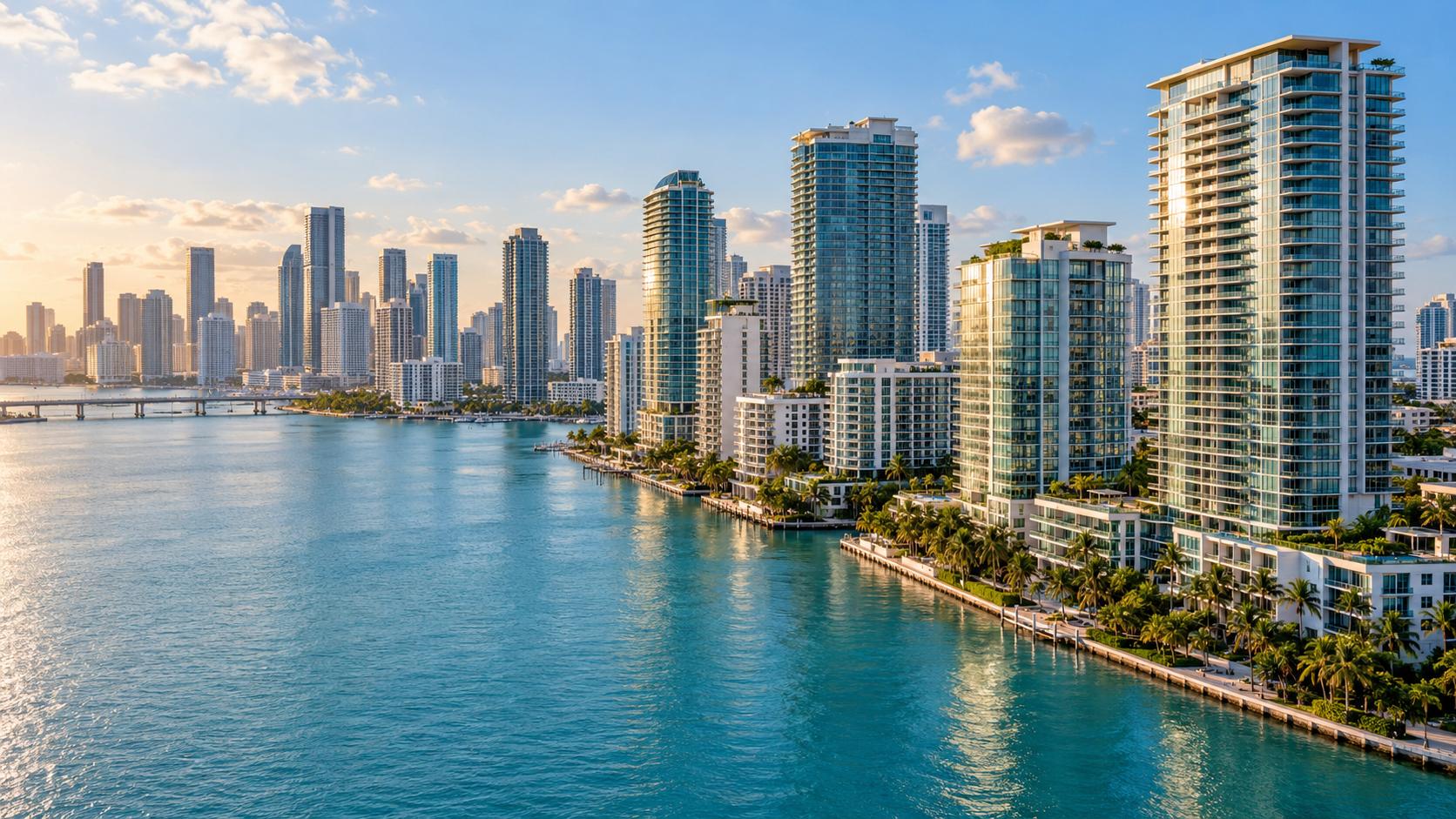
Start With the Property, Building and Parcel
Miami luxury real estate consists of several distinct markets: single-family estates, luxury condominiums, penthouses, waterfront properties and new construction. Each has different ownership obligations, comparable sales and risks. For the first half of 2026, MIAMI REALTORS + RWorld defined Miami-Dade luxury as the top 5% of closed sales, with thresholds of $4.3 million for single-family homes and $3.4 million for condominiums.
At Bonadomus, our approach begins by separating a buyer's search preferences from the evidence needed to evaluate a purchase. A fixed $1 million benchmark or a portal's "luxury" filter offers limited guidance. The consequential questions concern the particular property: its association's reserves, legal ownership boundaries, permit history, flood exposure and likely taxes after purchase.
Geography also needs precision. Miami-Dade County statistics are not City of Miami statistics, and countywide figures cannot establish conditions within one condominium building. Standard MLS resale totals also underrepresent new-construction, pre-construction and condominium-conversion transactions, leaving important parts of the development market outside the headline numbers.
This guide connects the 2026 market framework to the decisions behind an actual purchase. We distinguish houses from condos, explain penthouse and waterfront claims, map housing stock by location and outline a document-first due-diligence process. Market figures below identify their source and observation period; availability, pricing and regulatory requirements should be checked again before a transaction.
In this guide
- Luxury definitions and the 2026 market framework
- Houses, condominiums, penthouses and waterfront property
- Locations, branded residences and pre-construction
- Structural reviews, flood exposure and ownership costs
- Property-specific checklists and transaction planning
How the Top 5% and Top 1% Define the Market
There is no universal legal dollar threshold for luxury property. MIAMI REALTORS + RWorld's first-half 2026 methodology defines luxury as the top 5% of closed sales and ultra-luxury as the top 1%, with separate thresholds for houses and condominiums. Those cutoffs describe a historical sales distribution within a specified geography.
| Property type | Luxury: top 5% | Ultra-luxury: top 1% |
|---|---|---|
| Single-family homes | $4.3 million | $15 million |
| Condominiums | $3.4 million | $10 million |
We avoid treating $1 million as a permanent luxury definition because it combines materially different products. A sale above that amount can fall well below the county's statistical luxury threshold. The $1 million-plus category remains useful for tracking broader high-price activity when its limitations are clear.
Portal classifications introduce another distinction. A website may apply "luxury" through search filters, brokerage positioning or listing descriptions rather than a percentile calculation. Differing result counts therefore do not establish differing estimates of the same market, particularly when search boundaries and observation dates are unclear.
A threshold also provides no valuation conclusion about an individual property. A condominium asking above $3.4 million does not become appropriately priced because its asking price exceeds the first-half 2026 cutoff. Its value still requires comparable closed sales, condition adjustments and review of building obligations.
Miami vs. Miami-Dade: Define the Market Geography
Miami-Dade County encompasses multiple municipalities and unincorporated areas. Brickell and Downtown belong to the City of Miami; Miami Beach, Coral Gables, Bal Harbour, Surfside, Sunny Isles Beach and Key Biscayne are separate municipalities. Their housing stock and administrative procedures differ.
Our first question about a statistic is therefore simple: which geography does it describe? A countywide condo supply figure cannot establish inventory conditions in Brickell, and a Miami Beach waterfront sale cannot automatically serve as a comparable for a Coral Gables canal-front house.
When reviewing Miami real estate, the search label should be reconciled with the property's actual address, parcel and municipal jurisdiction. That step identifies where to request permits, resolve code questions and confirm the applicable building review process. It also prevents a broad search category from becoming an unsupported local market claim.
What the 2026 Numbers Reveal About Segment Differences
The Miami luxury real estate market showed contrasting conditions in the available 2026 reports. MIAMI REALTORS + RWorld reported 194 Miami-Dade residential sales at $10 million or more through August, exceeding the full-year 2025 total of 170. The same August reporting period showed 12.1 months of existing-condominium inventory countywide, underscoring the need to separate segments.
| Dataset and geography | Observation period | Reported result |
|---|---|---|
| Miami-Dade residential sales at $1 million or more | July 2026 | 394 sales, up 15.5% from 341 in July 2025 |
| Miami-Dade residential sales at $1 million or more | June 2026 | 29.1% year-over-year growth |
| Miami-Dade residential sales at $10 million or more | January through August 2026 | 194 sales versus 170 during all of 2025 |
| Miami-Dade existing-condominium inventory | August 2026 | 12.1 months of supply |
| South Florida regional residential sales at $10 million or more | Year to date in the July 2026 report period | 346 sales; 87% all-cash |
The sources are MIAMI REALTORS + RWorld's July 17, August 17, August 18 and September 16, 2026 releases. The South Florida row covers the broader region and must not be read as Miami-Dade-only activity. Likewise, existing-condominium inventory includes a broader price range than the statistical luxury segment.
Whether conditions favor a buyer or seller depends on the relevant competitive set. Substantial countywide condo supply may justify investigating concessions and competing listings, but it does not prove that a particular penthouse is readily negotiable. Strong high-price sales also do not establish broad shortages among single-family homes.
For negotiations, we would examine competing properties, recent comparable closings, asking-price changes and the seller's documented obligations. Days on market require context, including relisting history and changes in condition or terms. A county headline provides a starting point rather than a pricing instruction.
Watch for the next monthly report before relying on these figures. Different periods should remain separate: a year-to-date count compared with a prior full year is not a conventional year-over-year growth measurement.
What Current Luxury Market Data Can and Cannot Tell You
Market statistics describe transactions and inventory within a defined dataset and period. They can reveal activity and differences between segments, but they cannot value a particular property, forecast appreciation or establish its structural condition. MIAMI REALTORS also states that standard MLS totals largely exclude South Florida new-construction, pre-construction and condo-conversion sales.
That omission matters when evaluating branded residences or an area with substantial development activity. Developer reservations, signed contracts, cancellations and completed closings represent different stages. Combining them with resale closings without explanation creates a misleading picture of demand.
Our analytical starting point is a comparable-property group. For a condominium, that may include closed sales in the same building, adjusted for floor, layout, exposure, condition and documented rights. For a house, lot characteristics, permitted improvements, water access and structural condition can materially affect comparability.
- Activity data can show how frequently a defined price band transacted during the observed period.
- Inventory data can help assess competing supply when the geography and property type match the search.
- Property documents establish obligations and risks that transaction summaries cannot capture.
- Cost estimates require current, property-specific insurance, tax and association information.
Investment comparisons also need the correct framework. Buyers comparing a residence with South Florida multi-family properties should separate personal-use preferences from income-property underwriting. Rent assumptions, vacancy, maintenance, legal use and financing terms require their own evidence; a luxury sales report supplies none of those inputs.
We prefer a clear list of unresolved questions to a precise-looking valuation built on weak comparisons. Missing documents should remain identified as missing until the appropriate source resolves them.
Miami Luxury Homes vs. Condos: Compare Ownership Obligations
Miami luxury homes and luxury condominiums carry different ownership responsibilities. A conventional single-family purchase generally includes the land and structure, while a condo purchase includes a legally defined unit and shared interests governed by association documents. Houses concentrate maintenance decisions with the owner; condos distribute significant costs and decisions across the association.
| Comparison | Single-family house | Condominium |
|---|---|---|
| Ownership | Land and improvements, subject to title and any association restrictions | Unit boundaries and shared interests defined by the declaration |
| H1 2026 Miami-Dade luxury threshold | $4.3 million | $3.4 million |
| Maintenance | Owner generally manages structure, grounds and private systems | Responsibilities divided between owner and association |
| Insurance review | Property, wind and flood coverage as applicable | Master policy plus appropriate unit-owner coverage |
| Core documents | Title, survey, permits, inspections and any HOA documents | Declaration, financials, reserves, structural reports and assessments |
| Location examples | House inventory in Coconut Grove, Coral Gables and Key Biscayne | Tower inventory in Brickell, Downtown and oceanfront municipalities |
The threshold row uses MIAMI REALTORS + RWorld's first-half 2026 closed-sale methodology. It is not a price recommendation. Location examples describe housing stock rather than exclusive categories; several of these areas contain both houses and condominiums.
These segments can move differently within the same reporting month. A house with unresolved permitting and a condo with substantial upcoming assessments also face different negotiation issues, even when their asking prices match. The relevant comparison includes the acquisition price and the obligations that follow closing.
Luxury Houses and Single-Family Estates
For luxury single-family homes, the land and legal improvements deserve attention before finishes. We would establish the surveyed boundaries, easements, setbacks, permitted floor area and status of additions. Roof condition, electrical service, drainage, air-conditioning and other systems then help define immediate and longer-term spending.
A useful hypothetical illustrates why sequencing matters. Suppose an appealing house has an enclosed terrace that appears in marketing photographs but lacks clear permit closure. The buyer needs to understand its legal status, potential corrective work and any financing or insurance implications before accepting the advertised floor area as settled.
Gated communities, waterfront estates and canal-front homes also require separate checks. A gate does not explain association obligations, while a waterfront position does not establish usable dockage. Privacy preferences should be evaluated through objective features such as setbacks, sightlines and adjacent development rights.
A wider comparison of South Florida homes can clarify trade-offs between land, structure and location. Buyers considering South Florida townhouses should additionally verify the legal ownership form: an attached design alone does not reveal whether condominium or other association obligations apply.
Miami Luxury Condos
Miami luxury condos combine private living space with shared financial and operational exposure. Amenities, staffing and services create recurring expenses that should appear in budgets and operating agreements. The quality of unit finishes does not establish the association's financial condition.
When comparing Miami luxury condos for sale, review buildings individually. Building age, inspection status, reserves, litigation, collection issues, rental restrictions and lender eligibility can distinguish two otherwise similar units. A renovated apartment remains exposed to common-building obligations allocated under the governing documents.
Rental plans require particular care. Association rules, municipal requirements, approval procedures and any minimum lease terms must support the intended use. A listing's income projection or reference to flexible rentals should remain an unverified claim until supported by current documents.
What Miami Penthouses Actually Include
Miami penthouses are generally condominium units described by their position or marketing designation, rather than a separate legal property type. Their ownership boundaries and obligations arise from recorded documents. A top-floor location does not automatically include ownership of the roof, and a large terrace does not automatically constitute deeded private space.
For our review, the first task is matching the marketed features to the declaration, plans and applicable assignments. A terrace may be part of the unit, a limited common element or another form of restricted-use area. Those distinctions can affect maintenance duties, alteration approvals and access rights.
- Terraces and roofs: identify ownership, exclusive-use rights, waterproofing duties and access for repairs.
- Private elevators: verify the legal access arrangement, service obligations and emergency procedures.
- Parking and storage: establish whether spaces are deeded, assigned or subject to reassignment.
- Mechanical equipment: confirm who owns and maintains equipment serving the residence.
- Rooftop pools or outdoor improvements: review permits, structural documentation and responsibility for leaks.
Consider a hypothetical penthouse with an expansive outdoor terrace. If the association maintains the structural slab but the owner maintains finishes and certain drainage components, a future waterproofing project could involve several separate obligations. The cost picture remains incomplete until counsel and technical professionals reconcile those responsibilities.
Our preference is to resolve that allocation before the buyer commits to assumptions about outdoor living or renovations. Questions should include whether the association can enter the terrace, whether access disrupts use and whether replacement materials must meet specified standards.
Comparable sales also need matching legal and functional characteristics. Interior area, outdoor area, ceiling heights, elevator arrangements and condition should be evaluated separately rather than collapsed into one price-per-square-foot comparison. The penthouse label itself supplies no consistent measure of utility or value.
Waterfront Homes, Oceanfront Condos and Bayfront Properties
Miami waterfront real estate includes oceanfront condos, bayfront condos, canal-front houses and riverfront houses, each with different access and maintenance questions. A dry lot with a water view belongs in a separate category. Claims such as "deep water," "ocean access" and "no fixed bridges" require property-specific verification.
| Property category | What to verify |
|---|---|
| Oceanfront condo | Legal beach access, building exposure, flood protection and maintenance obligations |
| Bayfront condo | View orientation, dock rights if claimed, shoreline maintenance and neighboring development |
| Canal-front house | Water depth, bridge clearances, route to open water, seawall and dock permits |
| Riverfront house | Navigable route, operational restrictions, shoreline condition and permitted improvements |
| Dry lot with water views | Absence or existence of separate access rights and potential changes to the view |
For buyers evaluating Miami waterfront homes for sale around a particular vessel, the vessel's dimensions should drive the access review. Draft, beam, overall length and air draft need comparison with the berth, approach and full navigation route. A statement about one bridge or the water directly beside a dock does not resolve the entire journey.
Depth also needs context, including where and under what conditions it was measured. A qualified marine professional can assess whether available information supports the proposed use and whether further measurement is necessary. Dock dimensions and appearance do not establish permitted capacity.
We would separate the seawall inspection from the general home inspection when specialist assessment is warranted. Condition, elevation, drainage interactions and access for replacement work may affect cost and feasibility. Recorded rights and permits should support any claimed dock or shoreline improvement.
Flood exposure remains a separate review. Waterfront parcels do not all share one flood designation, and inland property can also face flooding. The flood-zone and elevation checks later in this guide apply to both waterfront properties and properties without direct water frontage.
How to Interpret Ultra-Luxury and the $10M+ Sales Band
Miami ultra-luxury real estate and the $10 million-plus sales band overlap, but they are not interchangeable. Under MIAMI REALTORS + RWorld's first-half 2026 Miami-Dade methodology, the top 1% began at $15 million for single-family homes and $10 million for condos. A house selling between those amounts therefore falls within the $10 million-plus band without meeting that period's single-family ultra-luxury cutoff.
The association's September 16, 2026 release reported 194 Miami-Dade residential sales at $10 million or more through August. That was 24 transactions, or approximately 14.1%, above the 170 recorded in all of 2025. This comparison measures the reported transaction count against a prior full-year total; it does not establish price appreciation.
Small samples make interpretation especially important at the upper end. A few unusually large estates or condominium transactions can shift an average substantially. Differences in waterfront access, lot dimensions and legal rights also limit the usefulness of a broad average for an individual property.
The regional South Florida report for July 2026 recorded 346 year-to-date sales at $10 million or more, with 87% all-cash. Those regional figures do not establish the cash share for Miami-Dade or a particular building. An all-cash structure removes some lending steps, while title, structural, insurance and ownership reviews remain necessary.
For a cash buyer, we would establish document-delivery expectations and inspection access early rather than assume the transaction can safely proceed faster. Off-market transactions and developer sales may also be absent from the MLS comparison set. Any additional evidence used in valuation should identify its source, transaction stage and limitations.
Where Luxury Homes in Miami Differ by Building Stock
Luxury homes in Miami-Dade cluster across different forms of housing: high-rise condominiums in Brickell and Downtown, oceanfront towers along coastal municipalities, and combinations of houses and condos in Coconut Grove, Coral Gables and Key Biscayne. These descriptions identify property stock rather than rank neighborhoods. The correct location depends on the buyer's property requirements and verified ownership constraints.
We begin location comparisons with objective criteria: building form, lot requirements, travel routes, water access, permitted use and maintenance preferences. A buyer seeking a dockable house needs a different search than someone prioritizing an elevator-served residence with building management. Each preference introduces its own verification work.
Buyers exploring Upper East Side Miami real estate should apply the same address-level discipline. Confirm the parcel, housing type and applicable rules before importing assumptions from another Miami submarket. A neighborhood name alone does not establish waterfront access, condition or development potential.
Brickell and Downtown Miami Luxury Condos
Brickell luxury condos and Downtown Miami condos place substantial emphasis on high-rise ownership. Searches can include existing buildings and new-development offerings, but those products require different evidence. An operating association has financial and maintenance history; a proposed development relies more heavily on contractual commitments and verified project progress.
For resale towers, compare the building's competing inventory, closed sales, reserves and rental policies. Similar floor plans can have different exposures, elevator proximity and service arrangements. Building-level information is more useful than an average combining unrelated towers.
Where a building includes commercial space, understand how shared expenses, access and operations are allocated. Buyers separately evaluating Miami commercial real estate need a different analysis of permitted use, leases and operating responsibilities. Residential tower pricing cannot establish the value or suitability of a commercial interest.
Miami Beach, Bal Harbour, Surfside and Sunny Isles Beach
These coastal municipalities include oceanfront condominium stock, while Miami Beach also includes waterfront houses on island locations. A search for Miami Beach real estate should distinguish the house market from oceanfront and bayfront condo buildings. Their comparable sales, insurance arrangements and maintenance responsibilities differ.
Bal Harbour condos, Surfside condos and Sunny Isles Beach condos require individual structural and financial review. A coastal address does not establish the condition of balconies, waterproofing, garages or common infrastructure. Recent cosmetic renovations should be evaluated separately from building-wide work.
Municipal procedures also matter. Miami Beach's official document library includes recertification, structural-integrity maintenance and flood-barrier forms, illustrating the need to check the relevant city process. Documents collected for a building elsewhere in the county may not answer every local compliance question.
Coconut Grove, Coral Gables and Key Biscayne Luxury Homes
Coconut Grove luxury real estate and Key Biscayne real estate include both houses and condominiums. Coral Gables luxury homes also span single-family, gated and waterfront settings alongside condominium inventory. Buyers should identify the desired ownership form before narrowing the location.
For a house purchase, investigate lot configuration, easements, permitted improvements and any applicable historic or design restrictions. Coconut Grove is within the City of Miami, while Coral Gables and Key Biscayne have their own municipal governments. That distinction directs permit and planning inquiries.
Waterfront parcels require the same vessel-access, dock and seawall checks used elsewhere. A recognized neighborhood name supplies no assurance about depth or bridge clearance. Renovation plans should also be reviewed against the property's actual rules, including any association restrictions and municipal approval requirements.
Miami Branded Residences: Verify the Contract Behind the Name
Miami branded residences associate residential developments with hospitality, fashion, automotive or other brands. Services, fees, rental arrangements and brand obligations vary by project. A buyer should evaluate each development according to its verified stage, from proposed or approved through permitted, under construction, completed and operational.
A broker page displaying a future "built" year does not establish delivery. We would distinguish an announced schedule from issued permits, observed construction and completed approvals. Even a construction milestone does not guarantee the date when an individual buyer can close or occupy.
The brand relationship deserves its own document review. Questions include the term of the licensing arrangement, conditions for termination, required service standards and which entity bears operating responsibilities. The purchase contract and governing documents should identify which advertised features create enforceable obligations.
- Services: determine what is included, optional or charged separately.
- Fees: identify projected association costs and any separate brand or service charges.
- Rental programs: verify eligibility, restrictions, management terms and municipal compliance.
- Changes: review contractual provisions allowing alterations to plans, materials or services.
Our position is that any brand premium needs support from the specific product and documents. Renderings cannot establish operating performance or the eventual cost of maintaining the promised service level.
Mixed-use projects introduce additional distinctions. Comparing residential interests with South Florida commercial real estate requires separate attention to legal use, expense allocation and operating agreements. The residential purchase should stand on its own verified rights and obligations.
Resale vs. Pre-Construction Luxury Property
Resale allows inspection of an existing property and review of operating history. Pre-construction shifts more attention to the developer contract, deposit exposure, construction progress and future delivery conditions. Neither approach eliminates uncertainty.
| Issue | Resale | Pre-construction |
|---|---|---|
| Physical inspection | Existing unit and accessible building components | Plans and specifications initially; later access depends on stage and contract |
| Financial documents | Actual budgets, financial statements and assessment history | Projected budgets and development documents |
| Deposits | Contract-specific escrow and contingency terms | Installments, escrow treatment and refund rights require legal review |
| Assignment | Contract restrictions still require checking | Developer consent, fees or prohibitions may apply |
| Completion exposure | Existing condition and potential repairs | Delays, contractual changes and delivery requirements |
| Market visibility | May appear in MLS resale records | Often underrepresented in standard MLS totals |
For pre-construction, counsel should review cancellation rights, default provisions and the treatment of deposits. Buyers also need a workable plan if delivery timing changes. Financing expectations made when signing should be reassessed as closing approaches.
Tax assumptions need updating too. The Miami-Dade Property Appraiser cautions that a contract signed well before completion may not equal market value on the relevant January 1 assessment date. An early purchase budget should therefore remain provisional.
Condo Milestone Inspections, SIRS, Reserves and Assessments
Florida's milestone inspection and structural integrity reserve study requirements concern qualifying buildings and associations, regardless of their luxury positioning. Section 553.899 addresses milestone structural inspections, while Section 718.112 addresses SIRS and related reserve requirements. Buyers need building-level verification of applicability, completed work, funding, insurance and assessments.
A milestone inspection and a SIRS serve different purposes. Structural inspection addresses the building's condition under the applicable framework; a reserve study informs planning for specified components and funding needs. Possession of one document does not establish that every inspection, repair or funding obligation has been satisfied.
Under Florida's condominium purchase disclosure statute, applicable contracts must address specified inspection and reserve-study information or status. Buyers should have counsel confirm the required documents, delivery rules and contractual rights. A verbal statement that the building is "compliant" is insufficient evidence.
Miami-Dade's recertification program also operates alongside state requirements, with jurisdiction varying by location. The county's community association and building recertification records search provides a practical starting point. Confirm the responsible authority and obtain any missing municipal records rather than interpreting an incomplete search as clearance.
- Inspection status: obtain complete reports, required follow-up findings and documentation of completed repairs.
- Reserve position: compare the SIRS recommendations, current balances, adopted budget and funding arrangements.
- Assessments: distinguish approved charges from proposed projects and unresolved future funding needs.
- Insurance: review current coverage, deductibles, exclusions and relevant renewal information.
- Governance: examine minutes and financial disclosures for issues not apparent in a listing.
A hypothetical reserve gap shows why this review belongs early in negotiations. If a study identifies major work while current funding appears insufficient, the buyer needs clarification of the adopted funding plan and potential exposure. That finding may change the buyer's price analysis, contingency requirements or willingness to proceed.
Responsibility for an assessment at closing should be expressly resolved in the contract with legal guidance. Payment timing, approval date and installment arrangements can create ambiguity. We would also ask about discussed projects that have not yet become a formal assessment, while avoiding unsupported estimates of what they will cost.
Flood Zones, Elevation and Waterfront Due Diligence
Flood exposure in Miami is parcel-specific. Review the property's current effective FEMA designation, any preliminary designation and available elevation documentation before relying on a location-based assumption. Insurance requirements and physical flood exposure are related questions that should each receive direct attention.
The official Miami-Dade flood-zone mapping tools provide a starting point for checking the address. Preliminary mapping should be examined separately from currently effective maps. A proposed designation should not be represented as an already effective requirement.
Miami-Dade County states that flood insurance is required for federally backed mortgages on properties in Special Flood Hazard Areas. A property outside such an area can still face flood exposure, and other lender or coverage requirements may apply. Cash buyers should make an informed coverage decision rather than equate the absence of a mortgage requirement with absence of risk.
An elevation certificate helps qualified professionals interpret relevant elevations, but it is not a guarantee against flooding. Confirm that the document corresponds to the property and reflects relevant conditions. For altered buildings, ask whether additional or updated information is needed.
- Review elevation, drainage and the position of vulnerable equipment with qualified professionals.
- Assess seawall condition and height where applicable, including interactions with the surrounding site.
- Verify dock, shoreline and flood-barrier permits rather than relying on visible improvements.
- Ask insurers about coverage terms, deductibles and information needed for a reliable quote.
- Distinguish documented past events from assumptions about future flood performance.
For condominiums, the review should include common infrastructure such as garages, electrical equipment and access systems where relevant. A high-floor unit may still depend on building components located at lower elevations. Our due-diligence plan treats the residence and the infrastructure supporting it as connected exposures.
Calculate Insurance and Carrying Costs for the Specific Property
Carrying costs for luxury property include insurance, taxes, association charges, maintenance and potential assessments. Generic percentages can obscure major differences between properties. We build the comparison around current quotes, actual documents and clearly identified estimates, with final advice supplied by the appropriate professionals.
For a house, review homeowners coverage and the treatment of wind and flood risks with a licensed insurance professional. For a condo, reconcile the master policy with appropriate unit-owner coverage, often called HO-6. The governing documents and policy language help establish which interests and potential losses require separate protection.
A quoted premium is only part of the insurance analysis. Deductibles, exclusions, coverage limits and conditions can materially affect retained risk. Replacement-cost assumptions also require care because market value and reconstruction cost measure different things.
- Property insurance premiums, applicable flood coverage and deductibles
- Association dues, adopted increases and separately charged services
- Approved assessments and documented funding plans for upcoming work
- Estimated post-purchase property taxes and non-ad valorem charges
- Maintenance for roofs, systems, grounds, pools, docks or seawalls as applicable
- Financing, utilities and management expenses relevant to the ownership plan
For a second home, vacancy conditions and management arrangements should be discussed with insurers and service providers. An investment model should separately identify permitted rental use, projected occupancy and all operating assumptions. Potential income should never be presented as a guaranteed offset to ownership costs.
How Property Taxes Can Change After Purchase
The seller's property tax bill is not a reliable forecast of the buyer's future bill. Miami-Dade's Property Appraiser warns that a sale can remove the seller's Save Our Homes assessment cap and result in reassessment at market value for the next tax year. A long-held property can therefore carry a historical bill that materially understates a new owner's budget.
The official Miami-Dade Property Appraiser tax estimator offers a property-specific starting point. Its output remains an estimate, and exemption eligibility or other tax circumstances require separate verification. Buyers should avoid treating their purchase price and eventual assessed value as automatically identical.
The county's Tax Visualizer can help explain ad valorem components, but it excludes non-ad valorem assessments and service fees. Those additional charges belong in the ownership budget. Review the relevant bill and official information to avoid omitting costs simply because they fall outside the visualization.
For pre-construction, refresh the tax estimate as the property's status and assessment information develop. A tax professional can evaluate ownership-specific questions, while the Property Appraiser remains the source for assessment records and official tools.
Buyer Due-Diligence Checklists by Property Type
Due diligence should follow the legal property type and the physical exposure. Condos and penthouses require association and building review; houses require parcel, structure and systems review; waterfront properties add navigation and shoreline checks. A penthouse or waterfront label supplements the underlying checklist rather than replacing it.
Our preferred sequence starts with document collection, followed by targeted inspections and then reconciliation of insurance and tax estimates. These workstreams often overlap because quotes and records can take time. Contract deadlines should reflect the information needed, with counsel confirming the buyer's rights and obligations.
A broad search across South Florida real estate should narrow into a property-specific document request once candidates emerge. Each unresolved item needs an owner: seller, association, municipality, inspector, insurer, lender or legal adviser. Recording who will answer a question helps keep an attractive listing from outrunning the review process.
Due Diligence for Luxury Condos and Penthouses
- Confirm legal ownership. Review the declaration, amendments, bylaws, unit boundaries and recorded interests. Reconcile parking, storage and other marketed features with their actual assignments or title.
- Review financial condition. Obtain the adopted budget, financial statements, reserve balances and relevant collection information. Identify which figures are actual and which are projections.
- Examine the SIRS. Confirm applicability, study status, recommendations and the adopted funding approach. Direct technical questions to qualified professionals.
- Check inspection and recertification records. Obtain milestone reports, local recertification information and documentation of required follow-up work. An inspection date alone does not establish closure.
- Reconcile insurance. Review the master policy and the unit coverage needed for the intended ownership and occupancy. Ask about deductibles and material exclusions.
- Identify assessments and disputes. Review approved assessments, discussed projects, relevant minutes and disclosed litigation. Have counsel address responsibility for charges at closing.
- Verify intended use and financing. Confirm rental restrictions, approvals, alteration rules and lender eligibility where financing is contemplated. Do not rely on another unit's past use.
- Add penthouse-specific checks. Establish terrace, roof and elevator rights; maintenance allocations; equipment responsibilities; and permits for outdoor improvements.
Florida Section 718.503 disclosures should be reviewed as part of the contract process, including applicable inspection and SIRS information. Counsel should confirm whether the supplied documents and status language satisfy the transaction's requirements. Our role is to coordinate the evidence and identify gaps for the appropriate specialist.
Due Diligence for Waterfront Houses and Estates
- Review title and survey. Identify boundaries, easements, encroachments and recorded restrictions. Check any claimed access or waterfront rights rather than inferring them from photographs.
- Reconcile permit history. Match additions and major improvements to permits and closure records. Ask the relevant authority about open issues and obtain professional advice on unresolved work.
- Inspect structure and systems. Evaluate the roof, electrical, plumbing, cooling and other relevant components. Use specialist inspections where the property's construction or condition warrants them.
- Inspect the shoreline. Assess seawall and dock condition, permits and maintenance needs. Clarify whether replacement or repair would require additional approvals.
- Verify vessel access. Check berth dimensions, depth, bridge clearance and the complete route using the intended vessel's requirements. Record the source and limitations of supporting measurements.
- Review flood information. Check effective and preliminary maps, elevation documentation and relevant site conditions. Obtain insurance input before committing to an ownership budget.
- Model post-purchase costs. Obtain current insurance quotes, a reassessment estimate and non-ad valorem charges. Include property-specific maintenance obligations.
- Resolve use and renovation questions. Confirm municipal, historic, design and association restrictions relevant to the buyer's plans. Written verification is preferable to assumptions about neighboring properties.
Keep residential acquisition separate from the purchase of an operating enterprise. If a broader search also includes businesses for sale in South Florida, the business requires its own financial, licensing and contractual review. Residential comparables and inspection checklists do not establish the value or legal operability of that business.
For either property type, the final decision should identify what is verified, what remains uncertain and what obligations the buyer accepts. A clear unresolved-issues list is more useful than a general assurance that due diligence is complete.
Get a Property-Specific Market Analysis
Explore current Miami luxury listings by property type and location, then contact Bonadomus for a property-specific market analysis and due-diligence plan. The goal is a comparison grounded in the relevant building or parcel, with documented obligations and a clear path for resolving open questions.
Bonadomus supports buyers through property selection, market and neighborhood research, showings, negotiations, due-diligence coordination and closing assistance. The work connects the initial search with the evidence needed for a transaction. Legal, tax, insurance, association and construction matters require verification with the appropriate professionals and official sources.
A focused request should identify the intended use, preferred ownership type, acquisition budget and acceptable ongoing obligations. Waterfront buyers should include vessel requirements where relevant; condo buyers should specify any rental or renovation plans. These details help direct the review toward constraints that could change the decision.
- Building- or parcel-level comparable sales with their limitations identified
- A tailored document and inspection checklist
- Risk flags concerning structure, funding, permits, water access or intended use
- A cost framework separating verified figures from provisional estimates
That preparation gives negotiations a factual basis and helps the buyer assess the full purchase rather than the listing presentation alone.
Build the Purchase Decision on Verifiable Evidence
Miami's luxury market is most useful when understood by property type, geography and transaction evidence. The first-half 2026 Miami-Dade top-5% and top-1% thresholds provide a statistical framework, while the individual purchase requires building- and parcel-level verification. Neither a luxury label nor a countywide headline establishes a property's value or suitability.
The distinctions remain important throughout the search. A penthouse generally carries condominium obligations plus specific rights to verify; a waterfront home requires proof of access and shoreline condition. County data does not describe every municipality, and resale MLS statistics leave substantial development activity outside their scope.
Ownership costs deserve the same attention as acquisition price. Association funding, insurance terms, flood exposure and post-purchase taxes can change the comparison between seemingly similar properties. Seller expenses and marketing projections should remain separate from the buyer's verified budget.
A disciplined purchase connects comparable sales, legal documents, technical inspections and current cost information. With the appropriate professional review, buyers can make a decision that reflects both the property's documented advantages and the responsibilities they are prepared to accept.
What price qualifies as luxury real estate in Miami in 2026?
There is no legal dollar threshold, and a fixed $1 million cutoff mixes very different properties. MIAMI REALTORS + RWorld's first-half 2026 methodology defines Miami-Dade luxury as the top 5% of closed sales and ultra-luxury as the top 1%. Luxury started at $4.3 million for single-family homes and $3.4 million for condominiums. Ultra-luxury started at $15 million and $10 million. These cutoffs describe past sales and do not show whether a specific listing is fairly priced.
Is a Miami penthouse a separate legal property type?
Generally no. A penthouse is usually a condominium unit named for its position or for marketing, so it carries the same association obligations as other units. A top-floor unit does not automatically include the roof. A terrace may belong to the unit, be a limited common element or be another restricted-use area. Before relying on the listing, check terraces, private elevators, parking and rooftop equipment against the declaration and the recorded assignments.
What is the difference between a milestone inspection and a SIRS for a Miami condo?
A milestone inspection under Florida Statutes Section 553.899 assesses the structural condition of qualifying buildings. A structural integrity reserve study (SIRS) under Section 718.112 plans funding for specified building components. Having one of these documents does not prove that every repair or funding obligation has been met. Buyers should compare the SIRS recommendations with actual reserve balances, the adopted budget, approved assessments and records of completed repairs. They should also check Miami-Dade or municipal recertification records with the responsible authority.
Why could my property taxes be higher than the seller's after buying in Miami-Dade?
The Miami-Dade Property Appraiser warns that a sale can remove the seller's Save Our Homes assessment cap. The property can then be reassessed at market value for the next tax year. As a result, the bill on a home the seller owned for many years can be far lower than what the new owner will pay. Start with the Property Appraiser's tax estimator, then add non-ad valorem assessments and service fees. The county's Tax Visualizer leaves those charges out.
How do I verify that a Miami waterfront home can accommodate my boat?
Start with the vessel's draft, beam, overall length and air draft. Compare them with the berth, the approach and the full route to open water, including every bridge clearance. Claims such as 'deep water' or 'no fixed bridges' need checking for the specific property, and any depth reading should note where and under what conditions it was taken. A qualified marine professional should review the route. Seawall condition and dock permits should be checked separately from the general home inspection.
Do standard MLS statistics include Miami pre-construction and branded residence sales?
Largely no. MIAMI REALTORS states that standard MLS totals largely exclude South Florida new-construction, pre-construction and condo-conversion sales, so headline resale figures leave out much of the development market. Developer reservations, signed contracts, cancellations and completed closings are separate stages and should not be combined with resale closings. To value a branded residence, rely on the project's verified stage, the purchase contract and the brand license terms rather than on renderings.
Do cash buyers of Miami luxury property need flood insurance?
Miami-Dade County states that flood insurance is required for federally backed mortgages on properties in Special Flood Hazard Areas, so a cash buyer may have no lender requirement. Flood risk still depends on the specific parcel, and properties outside those zones, including inland ones, can flood. Check the current FEMA designation, any preliminary map changes and the elevation certificate. Then get coverage terms and deductibles from insurers before setting the ownership budget. For condos, also review lower-level building infrastructure the unit depends on, such as garages and electrical equipment.
- — Start With Property Type
- — Luxury Thresholds and Geography
- — The 2026 Market Numbers
- — Reading Market Data Carefully
- — Houses and Condo Ownership
- — Penthouse Rights and Responsibilities
- — Waterfront Access and Verification
- — Understanding the Ultra-Luxury Segment
- — Locations by Housing Stock
- — Brands and Construction Status
- — Structural Reports and Reserves
- — Parcel-Level Flood Review
- — Insurance Taxes and Costs
- — Property-Type Review Checklists
- — Plan Your Property Analysis
- — A Verifiable Purchase Decision